Few investments are sold as hard as gold. The pitch is seductive: a timeless store of value that protects you from inflation, currency collapse, and chaos. Commodities more broadly — oil, metals, agricultural goods — get a similar treatment as a hedge against rising prices. Before you carve out a chunk of your portfolio for them, it is worth separating the marketing from what the data actually shows.
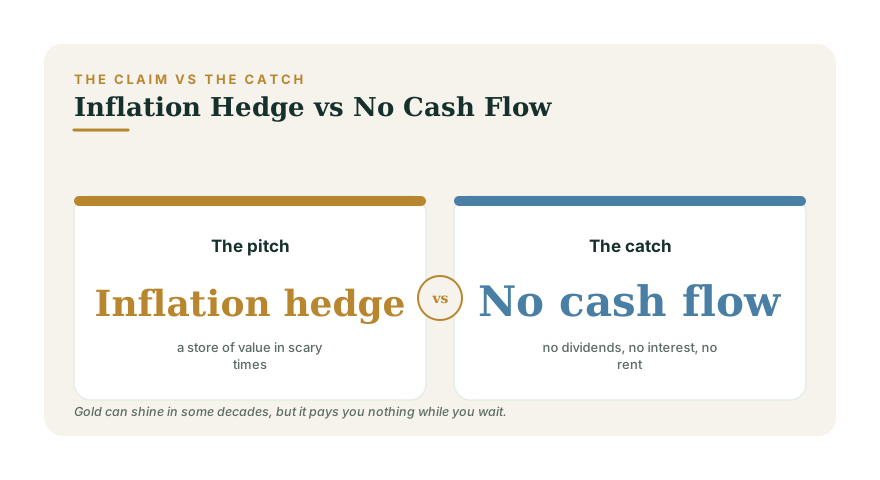
The inflation-hedge claim, against the data
The headline argument for gold is that it protects your purchasing power when inflation rises. The historical record is more complicated. Over very long horizons — think centuries — gold has roughly held its real value. But over the horizons that matter to actual investors, a decade or two, gold has been a wildly unreliable inflation hedge. It has gone through long stretches of falling or flat prices even while consumer prices climbed, and it has soared in periods of low inflation. Its price is driven far more by fear, sentiment, and real interest rates than by the inflation rate itself.
If your specific goal is to defend against inflation, there are instruments built for exactly that job with far more direct linkage — I Bonds and TIPS, whose payouts are tied to the official inflation rate. Compared with those, gold is a blunt and erratic tool for the same task.
The deeper problem: no cash flow
Here is the structural issue that no amount of marketing can fix. A share of stock represents a claim on a business that earns profits. A bond pays interest. Real estate generates rent. These assets produce cash flow, and that cash flow is the engine of long-term compounding.
Gold produces nothing. An ounce of gold today will be exactly one ounce of gold in fifty years. It pays no dividend, no interest, no rent. Its entire return depends on someone later being willing to pay more for it than you did — which means your gain rests purely on price speculation, not on any value the asset creates. That is a fundamentally different and weaker basis for return than a productive asset, and it is the same flaw that undermines other no-cash-flow assets, a point made bluntly in Crypto and NFTs: Why the Math Never Works. Commodities share this trait; in fact, storage and futures costs can make a long-term commodity holding lose ground even when spot prices are flat.
So why would anyone hold it?
Despite all that, gold is not worthless in a portfolio — for one specific reason. It often moves differently from stocks and bonds, sometimes rising sharply during market panics when almost everything else is falling. That low correlation can smooth a portfolio's ride, which is genuinely valuable. The case for a small gold allocation is a diversification case, not a return case. You are not buying it to grow your wealth; you are buying a sliver as insurance that may zig when your stocks zag.
Ways to hold it
If you decide a small slice fits, you have a few options:
- ETFs. A gold or broad-commodity exchange-traded fund is the simplest route for most investors — you buy it in your brokerage account like any stock, with no storage worries. Note that physical-gold ETFs can carry a higher collectibles tax rate on gains.
- Physical metal. Coins and bars are tangible, but you take on dealer markups, storage, insurance, and the hassle of selling. The convenience cost is real.
- Mining stocks. Shares of gold miners are a leveraged, more volatile bet — they track the metal loosely and add company-specific business risk. They are not a clean substitute for gold itself.
Why a small allocation at most
Put it together and the verdict is moderate, not zero and not large. Because gold and commodities produce no cash flow and have unreliable long-run returns, they should never be the core of a portfolio. But because they can diversify, a small allocation — many cautious investors cap it in the low single digits as a percentage of holdings — is defensible for those who want it. Anything more, and you are betting your future on price speculation instead of productive assets. Decide how much, if any, fits your goals and risk tolerance using the Model Portfolios tool, and keep your core grounded in the principles of asset allocation by age.