Military families run a financial life that civilian advice rarely fits. Pay arrives in pieces — base pay, allowances for housing and food, special pays — much of it untaxed. Moves come every two or three years, often across state lines or overseas. And a layer of benefits and legal protections exists that no civilian job offers. Knowing how the pieces work is what turns a complicated paycheck into real wealth.
The good news: the system is generous to those who use it deliberately. The trap is autopilot — leaving the TSP match unclaimed, missing a protection you are entitled to, or letting a move quietly create a tax mess.
The TSP and the BRS match: claim the free money first
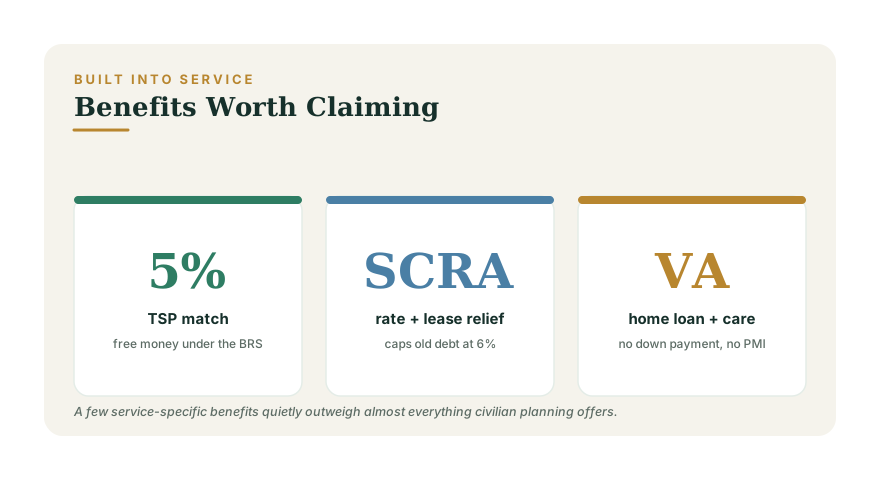
The Thrift Savings Plan (TSP) is the military's version of a 401(k): low-cost index funds, Roth and traditional options, and the same long-term growth as any good retirement account. Under the Blended Retirement System (BRS), the government matches your contributions — typically up to 5% of base pay once you contribute at least that much. That match is an immediate, guaranteed return. Contributing less than enough to capture the full match means leaving part of your compensation on the table.
For most junior service members, the Roth TSP is especially powerful, since pay is often taxed at a low rate now and the withdrawals later come out tax-free. If retirement accounts are new to you, the basics in How to Start Investing apply directly to the TSP.
SCRA: the legal protections most members forget to use
The Servicemembers Civil Relief Act (SCRA) is one of the most valuable benefits no one talks about. Among other things, it lets you cap the interest rate on debts you held before entering active duty at 6%, terminate a residential lease or auto lease early on certain orders, and gain protections against default judgments, foreclosure, and repossession while you serve.
The catch is that SCRA is not automatic — you generally have to request relief and provide a copy of your orders. If you carried a high-rate loan or credit card balance from before service, ask your lender to apply the SCRA rate cap. It is your right, not a favor.
Frequent moves and the state-residency question
A permanent change of station every few years raises a question civilians rarely face: which state do you actually pay taxes to? Thanks to federal rules, active-duty members keep their state of legal residence (domicile) even while stationed elsewhere, and the spouse can often claim the same residence. That means it is worth choosing — and keeping — a domicile in a state with no income tax when your situation allows, rather than accidentally picking up a new high-tax residency with every move.
Get this wrong and you can end up filing in the wrong state or paying tax twice. The general mechanics of changing tax homes are covered in State Taxes When You Move; the military overlay is the domicile protection on top of it. Because moves and deployments scramble routines, a larger, well-stocked emergency fund is also a smart hedge — see the emergency fund guide.
SGLI and the gaps it leaves
Servicemembers' Group Life Insurance (SGLI) provides low-cost term life coverage up to a set maximum, and it is easy to enroll in the full amount. But the maximum may not be enough for a family with a mortgage, young kids, and a non-working spouse. Many families supplement with a private term policy to close the gap. Coverage on the service member is the obvious piece; coverage on a stay-at-home spouse is the piece families forget, and the reasoning is the same one explained in Financial Planning Around a Stay-at-Home Parent. Disability protection matters too — read the most ignored insurance for why your ability to earn is worth insuring.
VA benefits: the home loan and beyond
The VA home loan lets eligible members buy with no down payment and no private mortgage insurance — a meaningful edge in a market where saving a down payment is the biggest hurdle. Beyond housing, VA benefits can include health care, disability compensation for service-connected conditions, education benefits transferable to a spouse or children, and survivor benefits. These are earned, not charity; the mistake is failing to file for what you qualify for.
Put the pieces together
Capture the full TSP match, apply SCRA where it helps, protect your state domicile through every move, size your life and disability coverage to your real obligations, and use your VA benefits deliberately. Run your numbers — pay, allowances, TSP, and goals — through the planning hub to see how a military paycheck builds lasting wealth.