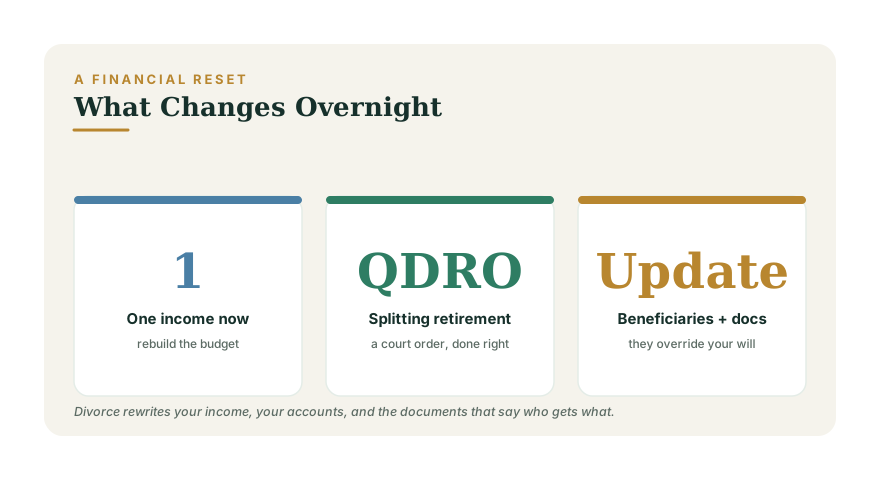
Divorce is one of the most disruptive financial events a person can go through. Almost overnight, a household built around two incomes and shared assets becomes one income, divided accounts, and a stack of documents that no longer reflect reality. On top of the emotional weight, you are suddenly responsible for decisions you may have shared or delegated for years. The path forward is to take it in clear, concrete steps rather than all at once.
Get a complete picture of what you have
Before anything can be divided, you need a full inventory: bank and brokerage accounts, retirement plans, the home and its mortgage, debts, insurance, and both incomes. Pull statements and credit reports for clarity. Knowing the complete picture protects you from an unfair split and from surprises later — a forgotten joint credit card or a retirement account you did not realize was marital property. Building a clear net worth statement is the natural first step, and the Net Worth Tracker gives you one place to assemble it.
Dividing accounts — and the QDRO
Splitting bank and taxable brokerage accounts is mechanical once the terms are set. Retirement accounts are different and easy to get wrong. To divide an employer plan like a 401(k) or pension without triggering taxes and penalties, you generally need a Qualified Domestic Relations Order (QDRO) — a court order that instructs the plan to pay a portion to a former spouse. Done correctly, the receiving spouse can roll their share into their own retirement account with no immediate tax. Done carelessly — for example, cashing out instead — it can cost a fortune in taxes and penalties. IRAs are split through the divorce decree rather than a QDRO, but still must be handled as a proper transfer, not a withdrawal. This is an area where professional help pays for itself.
Update every beneficiary and document — immediately
This is the step most people forget, and it is critical. Beneficiary designations on retirement accounts and life insurance override your will, so if your ex-spouse is still listed, they may inherit those assets no matter what your divorce decree says. As soon as you are legally able, update:
- Beneficiaries on 401(k)s, IRAs, and life-insurance policies.
- Your will, power of attorney, and healthcare directive.
- Account ownership, passwords, and authorized users.
The stakes are spelled out in Why Beneficiary Designations Override Your Will. Do not let this slide.
Rebuild the budget around one income
Your cost of living rarely drops in half even though your household income might. The same housing, utilities, and child-related costs now lean on one paycheck, possibly adjusted by child support or alimony. Build a fresh budget from your actual new income and expenses rather than your old joint numbers. Track spending for a month, then shape it with a framework from How to Build a Budget That Actually Works, and rebuild an emergency fund as an early priority — a single income has no backup earner, so the cushion matters more than ever.
Protect your credit and your coverage
Close or separate joint accounts so you are not on the hook for an ex's future spending, and make sure debts assigned to your former spouse are actually refinanced into their name — a decree does not release you from a lender's contract. Check that you have your own health insurance lined up, since you will likely lose coverage under a spouse's plan. If children depend on support payments, life and disability insurance on the paying parent helps guarantee that support continues.
Set new goals for a new chapter
Once the dust settles, your plan is now yours to design. Reset retirement targets for a single saver, decide how to handle the house, and set goals that fit the life you are building rather than the one you left. Much of the toolkit for a single-income household applies here — see Financial Planning When You're Single. To take stock of where you stand and what to fix first, start with the Financial Wellness assessment.