Every spring, plenty of people reach the filing deadline without all their paperwork in order — a late brokerage statement, a missing K-1, or simply a chaotic few months. A tax extension exists for exactly this situation, and filing one is free, routine, and nearly automatic. But it comes with one giant asterisk that trips up huge numbers of people, so let us be clear about what it does and, more importantly, what it does not do.
What an extension actually grants
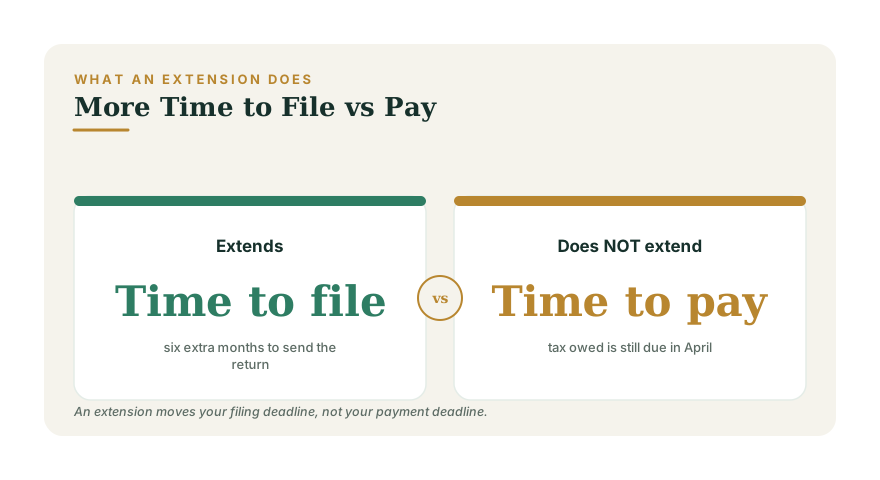
Filing an extension gives you roughly six more months to submit your tax return — typically pushing an April deadline to October. That is a real and useful benefit: it removes the failure-to-file penalty (the steep one) for those extra months, as long as you file by the new date. If you are waiting on documents or just need breathing room to do the return correctly, an extension is the responsible move, not a red flag. It does not increase your audit odds.
The giant asterisk: it does NOT extend time to pay
Here is the part that catches people: an extension to file is not an extension to pay. Any tax you owe is still due on the original April deadline. If you file an extension but pay nothing, you avoid the failure-to-file penalty but still rack up the failure-to-pay penalty plus interest on the unpaid balance from April onward. The extension protects your filing, not your wallet. Treat the payment deadline as fixed no matter what.
How to file one: Form 4868
Individuals request an extension with Form 4868. You can file it free through tax software, the IRS Free File system, or by mailing the paper form — it takes only a few minutes and asks for little more than your name, address, and an estimate of your tax. In one important shortcut, if you simply make an estimated payment through the IRS and indicate it is for an extension, that payment itself counts as filing Form 4868; you do not have to submit the form separately.
Estimating and paying what you owe
Because payment is still due, the key task is to estimate your tax bill well enough to pay most of it by April. You do not need a perfect return — a careful estimate is fine. Pull together your income documents, run a rough calculation (or let last year's return guide you), and pay as much as you reasonably can. Paying at least 90% of what you ultimately owe generally keeps penalties to a minimum. If your estimate turns out high, you get the difference back as a refund when you file; if it is low, you settle up then. If you find you owe more than you can pay, do not let that stop you from filing — read What to Do If You Owe the IRS for the payment-plan options.
Who should file an extension
- People waiting on documents — a delayed 1099, K-1, or corrected form. Filing accurately in October beats filing wrong in April.
- The genuinely overwhelmed — a move, a new baby, an illness. Extra time to get it right is exactly what the extension is for.
- People with complex returns — business owners, investors, or anyone whose return depends on other entities that file late.
- Those who simply are not ready — as long as they still pay their estimate by April.
An extension is not a magic delay button for a bill you cannot afford, and it is no substitute for fixing under-withholding — if a balance keeps surprising you, look at quarterly estimated taxes.
The bottom line
An extension is a clean, penalty-free way to buy time on the paperwork, provided you pay your estimated tax by the original deadline. If this is your first season filing, walk through the basics in How to File Your Taxes the First Time, and use the Tax Strategies tool to estimate what you owe before April so an extension protects you instead of quietly costing you.