Two pieces of money advice arrive at the same time and seem to contradict each other: "build an emergency fund" and "start investing as early as you can, because time is everything." Both are right, which is exactly why the question feels paralyzing. Do you stockpile cash that earns little, or put money into the market where it can grow? The mistake is treating it as an either-or. It is a sequence, and the order matters more than most people realize.
The reason order matters is simple: without a cash buffer, the next surprise expense gets paid for with debt or by selling investments at the worst possible moment. Sequencing safety first is what keeps your investing from quietly leaking out the back door.
Step one: a small starter fund
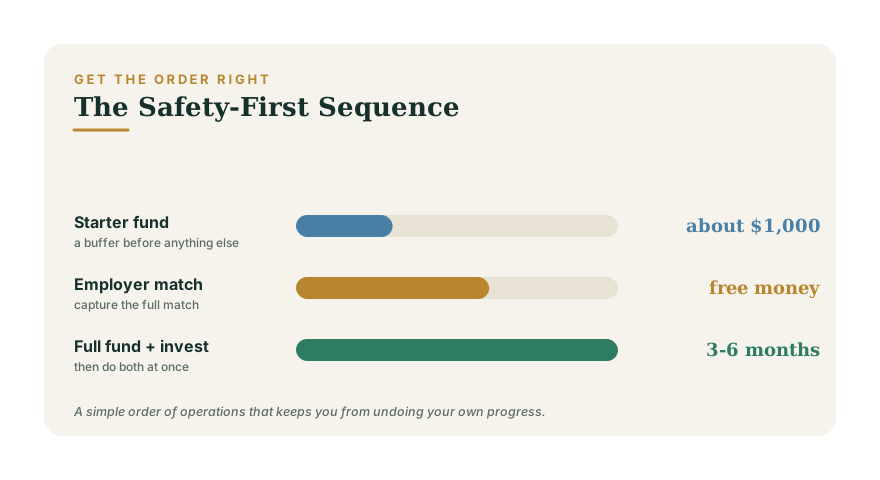
Before you invest a dollar, set aside a modest cash buffer — roughly $1,000, or whatever covers a typical unexpected bill in your life. This is not your full emergency fund; it is a speed bump between you and the credit card. The purpose is narrow but powerful: when the car battery dies or the dentist finds a cavity, you pay from cash instead of borrowing at 20%-plus interest. A starter fund stops small emergencies from becoming debt, and debt is the thing most likely to derail everything that follows. For the full picture of how big the eventual fund should be and where to keep it, see The Emergency Fund Guide.
Step two: capture the employer match
Here is the one place where investing jumps ahead of finishing your emergency fund. If your job offers a 401(k) match, contribute at least enough to get all of it — even before your cash cushion is complete. A typical match might be 50 cents on the dollar up to 6% of pay, which is an instant, guaranteed return no savings account or investment can match. Walking past it is leaving part of your compensation on the table. This is the rare exception to "safety first," because the match is so valuable that skipping it costs more than the small risk of investing slightly early. The broader order of operations is laid out in How to Start Investing.
Step three: finish the full fund, then invest in earnest
Once the starter fund exists and the match is captured, build the emergency fund up to its real target — commonly three to six months of essential expenses, more if your income is variable or you support a household on one paycheck. After that buffer is solid, you shift into building wealth: maxing tax-advantaged accounts, opening a brokerage, investing the surplus you used to funnel into savings. From here, saving and investing run in parallel rather than competing.
Why skipping the buffer is so costly
Imagine two people who both invest $300 a month. The first built a cash cushion first; the second skipped it to invest more, faster. A year in, both hit a $2,500 surprise — a job gap, a medical bill, a major repair. The first taps savings and keeps investing. The second has two bad options: borrow at high interest, or sell investments — often during a downturn, locking in a loss and triggering taxes. The "more aggressive" investor frequently ends up behind, because they were forced to undo their own progress at the worst time. The cost of skipping the buffer is not the modest interest you miss on cash; it is the forced bad decision waiting in the future.
What the buffer is really buying
It is tempting to view emergency cash as dead money because it grows slowly. Reframe it: the fund is not an investment, it is insurance against being forced to sell your investments. It is what lets you leave your long-term money untouched through every market dip and life surprise. That staying power — never being a forced seller — is one of the biggest hidden drivers of long-run returns. The peace of mind is real too; a funded buffer is one of the strongest predictors of low financial stress, and it changes how you handle the money conversations covered in The Money Conversations to Have Before Marriage.
Putting it together
The sequence in one line: starter fund, then full employer match, then finish the emergency fund, then invest everything you can. Most people can run later steps partly in parallel — you do not have to fully finish one before touching the next — but the priority order should hold when money is tight. To see how the pieces fit for your own numbers, run them through the Emergency Fund Calculator and sketch the full picture at the planning hub. Safety first is not the cautious choice — it is the one that lets everything else compound undisturbed.