Before the software calculates a single dollar of tax, it asks one question that shapes everything after it: what is your filing status? This one choice sets the width of your tax brackets, the size of your standard deduction, and which credits and deductions you can even claim. Getting it right is one of the easiest ways to lower your bill — and choosing the wrong one can quietly cost you.
The five filing statuses
There are five options, and your situation on the last day of the year usually decides which apply:
- Single — unmarried, with no dependents that qualify you for a better status.
- Married filing jointly — you and your spouse combine income on one return.
- Married filing separately — each spouse files their own return.
- Head of household — for unmarried people who support a qualifying dependent.
- Qualifying surviving spouse — available for a limited time after a spouse's death if you have a dependent child.
How status changes your brackets and deduction
Each status has its own set of bracket thresholds and its own standard deduction. The general pattern: married-filing-jointly brackets are roughly twice as wide as single brackets, and the joint standard deduction is roughly double the single one. Head of household sits in between, with wider brackets and a larger deduction than single. Because tax brackets are marginal, a wider bracket means more of your income is taxed at lower rates before you climb into the higher ones — which is why status matters so much.
Married filing jointly vs separately
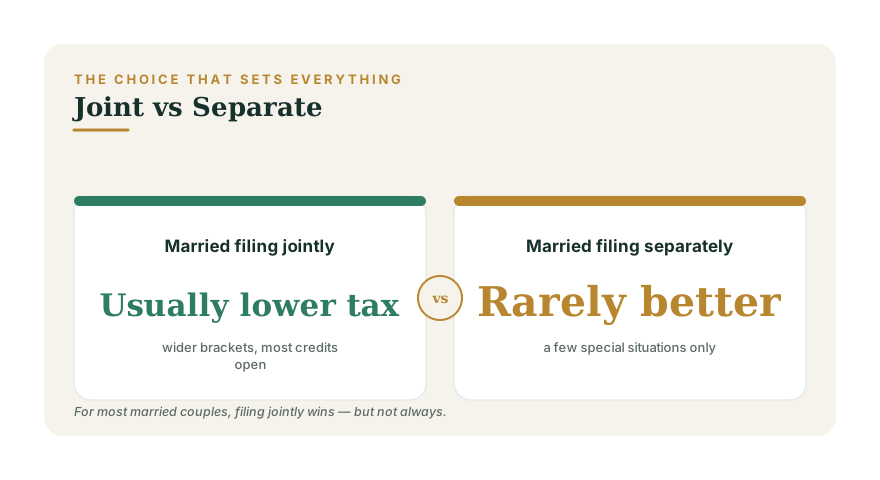
Once married, the real decision is joint versus separate. For the large majority of couples, filing jointly produces the lower combined tax. Joint filers get the widest brackets, the largest standard deduction, and access to credits that are reduced or completely off-limits to separate filers — including several education and child-related credits. Combining your finances on one return is usually the simpler and cheaper path; the broader money side of marriage is covered in Combining Finances When You Marry.
Filing separately is the right call only in specific situations. It can help when one spouse has very high deductible medical expenses (which are measured against that spouse's lower income), when you want to keep tax liabilities legally separate, or when separate filing lowers payments on an income-driven student loan repayment plan. These cases are real but uncommon, and separate filing usually means a higher total bill — so treat it as the exception you check, not the default.
Head of household: the status people miss
Head of household is the most overlooked status, and it is more generous than single. To qualify, you generally must be unmarried, pay more than half the cost of keeping up a home, and have a qualifying dependent (often a child) living with you for more than half the year. The reward is a larger standard deduction and wider brackets than single filers get. A single parent who files as plain "single" is leaving money on the table — this is worth checking carefully.
When your status is ambiguous
A few rules trip people up. Your status is generally determined by your situation on December 31 — marry on the last day of the year and the IRS treats you as married for the whole year. If you are separated but not yet divorced, you are still considered married for tax purposes, though you may qualify as head of household if you lived apart and supported a dependent. When in doubt, good tax software will ask the right questions, but knowing the categories helps you spot when something looks off.
How to choose
For most people the right status is obvious. Where it is not — a recent marriage, a separation, a dependent you are unsure about — the practical move is to estimate your tax both ways and pick the lower result. Most software lets married couples compare joint versus separate side by side. After you settle on a status, your deduction choice follows, and you can pressure-test the whole picture with the Tax Health assessment or map it into your broader plan at the planning hub.