Buy Now, Pay Later has spread to nearly every checkout page. Split a $200 purchase into four payments of $50, pay no interest, and walk away with the item today. It is marketed as a friendlier alternative to credit cards, and for a disciplined buyer it can be. But the very design that makes BNPL feel painless is what makes it quietly dangerous — and the dangers are easy to miss until several of these loans are running at once.
It is designed to make you spend more
The core danger is behavioral. Breaking a price into four small numbers reframes what you can afford — a $200 item becomes "just $50," which feels trivial. Research on BNPL consistently finds it increases both how much people buy and how often, precisely because it dulls the pain of paying. The Consumer Financial Protection Bureau has documented that BNPL users often spend more than they otherwise would and are more likely to also carry other debt (consumerfinance.gov). If splitting a payment is what makes a purchase feel doable, that is a signal you cannot actually afford it — the same trap explored in How to Stop Impulse Spending.
Loan stacking: the debt you cannot see
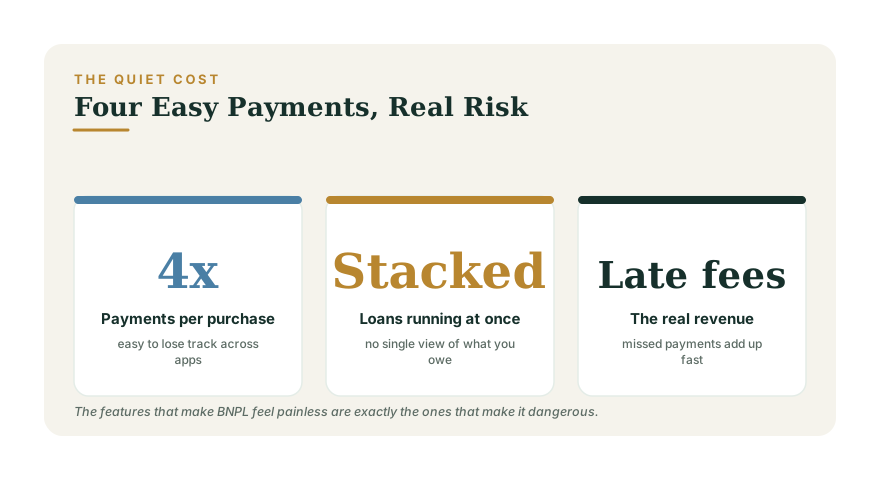
A single BNPL plan is manageable. The problem is that people open them one purchase at a time across multiple providers — one for shoes, one for electronics, one for a flight — until half a dozen four-payment schedules overlap. Because each provider only shows its own plan, there is no single dashboard of what you owe. This loan stacking means the total obligation and the cluster of due dates become invisible, and a budget that looked fine gets overwhelmed by payments the buyer never tallied. Unlike a credit card, BNPL rarely gives you one statement showing the whole picture.
Late fees and the autopay trap
The "no interest" headline hides where many providers actually make money: late fees and merchant charges. Miss a payment and a flat fee lands, sometimes several across a single plan. Because payments are usually set to autopay from a debit card, a thin checking balance can trigger a missed BNPL payment and an overdraft fee at your bank simultaneously. What felt like interest-free spending becomes a stack of penalties. And because the underlying debt does not shrink, missing payments simply piles cost on top of a purchase you have often already consumed.
Weak protections and murky reporting
BNPL sits in a grayer regulatory zone than credit cards, though that is changing. A few consequences to know:
- Disputes and refunds can be harder. If a product is defective or never arrives, unwinding a BNPL plan is often clunkier than a credit-card chargeback, and you may owe payments while a dispute drags on.
- Credit reporting is inconsistent. Many BNPL plans have not reported to the bureaus, so on-time payments may not build your credit — but missed payments increasingly can be sent to collections and hurt it. You get the downside without the upside.
- No unified statement. The absence of a monthly bill makes it easy to lose track of total exposure across apps.
The neutral mechanics of how these plans function are in Buy Now, Pay Later, Explained.
Using BNPL without getting hurt
It is not that BNPL must be avoided entirely — it is that it must be treated as the debt it is. If you use it, keep it to purchases you could pay for in full today, limit yourself to one plan at a time so the stack never forms, put the payments in your budget as real obligations, and make sure your linked account always covers the autopay. If you already have several plans running and feel underwater, the consolidation options in Debt Consolidation Loan vs Balance Transfer Card can help you regain a single view.
The bottom line
BNPL is debt wearing the costume of convenience. Its dangers are the overspending it encourages, the stacked loans it hides, and the fees that appear when a payment slips. Track every plan as if it were a credit-card balance, and if the split payment is the only reason a purchase feels affordable, skip it. Get a clear picture of what you owe with the Debt Payoff Planner, test your habits with the Financial Resilience assessment, and build a spending plan you control at the planning hub.