Subscriptions are designed to be forgotten. Each one is small enough to ignore, bills automatically so you never actively decide to keep it, and renews silently until you do something to stop it. That combination is why "subscription creep" — the slow accumulation of recurring charges — can quietly become one of the larger, and most wasteful, categories in a household budget. The fix is not willpower; it is a periodic audit.
Why creep happens
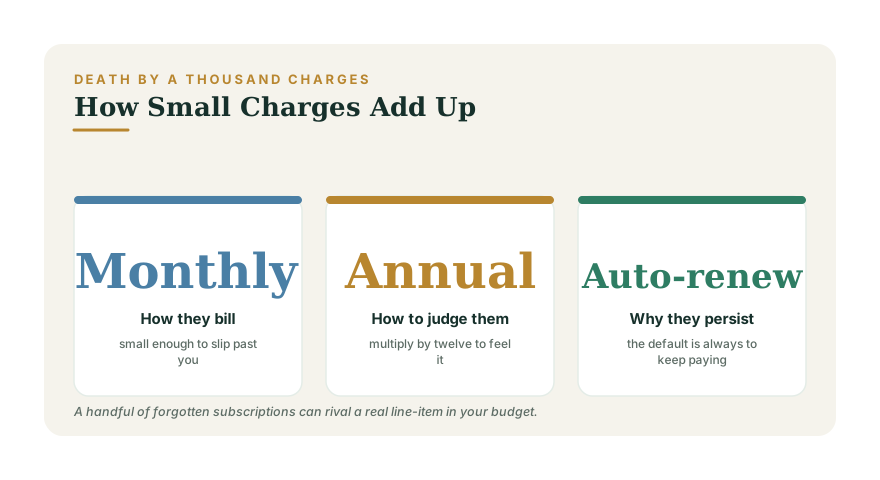
Nobody decides to overspend on subscriptions. It happens through defaults. A free trial converts to paid because you did not cancel in time. A service you used for one project keeps charging long after the project ended. Prices rise a dollar or two at renewal, below the threshold that would make you notice. Apps bill through your phone's app store where the charges are easy to miss. Because each individual amount is trivial, none of them ever triggers a decision — which is exactly the point of the pricing. The antidote is to force a decision on a schedule.
The audit, step by step
Set aside twenty minutes a couple of times a year and work through this:
- Pull the last three months of statements. Review every card and bank account, plus your phone's app-store subscription list, which hides charges that never touch your card statement directly.
- List every recurring charge. Write down each one with its amount and billing cycle. Convert everything to an annual figure by multiplying the monthly cost by twelve — a nine-dollar app is over a hundred dollars a year, which lands very differently.
- Sort each into keep, cut, or downgrade. Keep what you genuinely use and value. Cut what you forgot you had or have not touched in months. Downgrade what you use lightly to a cheaper tier or a shared family plan.
- Cancel immediately, not later. The moment you decide to cut something, do it in that session. "I will cancel it soon" is how creep survives every audit.
This is the same disciplined sweep detailed in The Subscription Creep Audit; treat it as a recurring appointment, not a one-off.
Questions to ask about each subscription
For anything on the fence, a few honest questions cut through:
- Have I actually used this in the last month?
- Would I sign up for it today at this price if I were not already subscribed?
- Is there a free or cheaper alternative that covers what I actually use?
- Am I paying for overlapping services — two streaming platforms, two cloud-storage plans, two apps that do the same thing?
The "would I sign up today" test is the most powerful, because it strips away the sunk cost of already being a subscriber.
Tactics that stop creep from coming back
Cutting once is easy; staying cut is the trick. A few habits help. Set a calendar reminder to review subscriptions on a fixed schedule. When you start a free trial, immediately note the trial end date and set an alert. Prefer annual plans only for services you are certain about, and monthly for anything experimental so quitting is painless. Some banking apps flag recurring charges automatically — use those alerts. And when a service raises its price at renewal, treat that as a prompt to re-decide rather than a fee to absorb. This fits the broader philosophy of trimming waste without deprivation in Cut Expenses Without Misery.
Redirect the reclaimed money
An audit only builds wealth if the freed-up cash goes somewhere deliberate. If you cancel a hundred dollars a month of unused services, that is over a thousand dollars a year — enough to fund an emergency cushion, a debt payment, or an investment contribution. Do not let it drift back into everyday spending. See what regular contributions of that size grow into with the Opportunity Cost Calculator, and fold the savings into your monthly plan using the Budget Analyzer.
Make it a habit
Subscription creep is a permanent, low-grade leak, so the defense has to be permanent too — a quick audit twice a year keeps it from ever getting large again. Pair it with the flexible, shock-resistant approach in Building a Recession-Resistant Budget, map your spending against your goals at the planning hub, and check how well your finances would weather a rough patch with the Financial Resilience assessment.