Two acronyms quietly run much of your tax return: AGI (adjusted gross income) and MAGI (modified adjusted gross income). You rarely think about them, but they decide whether you qualify for a deduction, how large a credit you get, and whether you can even contribute to certain accounts. Understanding them turns your tax return from a black box into something you can actually plan around.
Start with gross income
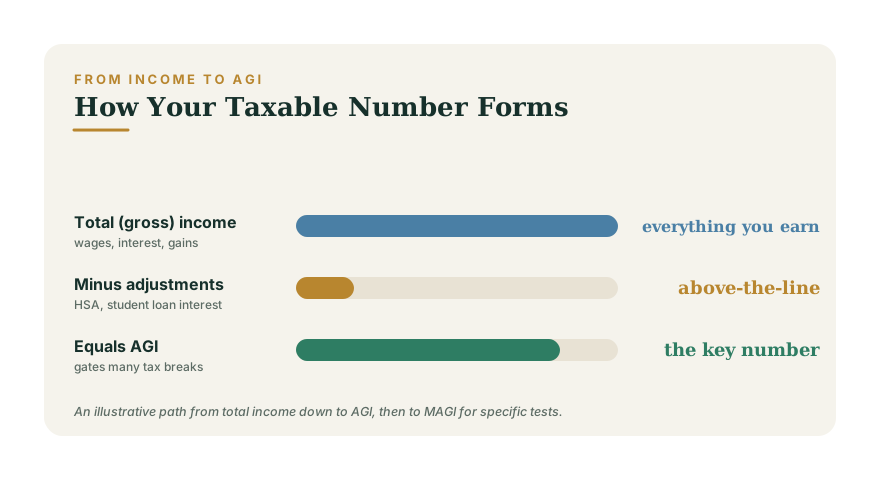
Your gross income is everything you earned during the year from nearly every source: wages, freelance income, interest, dividends, capital gains, rental income, and more. This is the top of the funnel — the broadest number on your return.
How AGI is calculated
From gross income, you subtract a specific set of deductions the IRS calls adjustments to income, sometimes nicknamed "above-the-line" deductions because they come before the standard or itemized deduction. Common adjustments include:
- Contributions to a deductible traditional IRA or HSA.
- Student loan interest you paid during the year.
- Half of self-employment tax, and contributions to self-employed retirement plans.
- Educator expenses for teachers.
Gross income minus these adjustments equals your AGI. The valuable thing about above-the-line adjustments is that you get them whether or not you itemize — they lower your AGI directly, and a lower AGI tends to unlock more tax breaks downstream. AGI is also the launch point for the rest of your return: subtract the standard or itemized deduction from AGI and you arrive at taxable income, which is what your tax brackets actually apply to.
What MAGI adjusts
MAGI is your AGI with certain deductions and exclusions added back in. The frustrating part is that there is no single MAGI — the exact add-backs depend on which tax break you are testing. For most people, though, MAGI is very close to AGI, because the items added back (like foreign earned income exclusions or certain education deductions) do not apply. The reason MAGI exists at all is to give each tax break its own consistent income definition for its eligibility test.
Why these numbers gate your tax breaks
Many of the most valuable parts of the tax code phase out as your income rises, and they almost always measure that income using AGI or MAGI rather than your gross salary. A few examples:
- Roth IRA eligibility. Your ability to contribute to a Roth IRA phases out above a MAGI threshold and disappears entirely above a higher one. This is why high earners turn to workarounds — see Roth vs Traditional IRA.
- Deductible IRA contributions. Whether a traditional IRA contribution is deductible depends on your MAGI and whether you have a workplace plan.
- Education and child-related credits. Many credits shrink and then vanish as MAGI climbs through a phase-out range. Because credits beat deductions dollar-for-dollar, staying under a threshold can be worth real money — see Tax Credits vs Deductions.
- Health insurance subsidies and Medicare surcharges. Marketplace premium credits and the high-income Medicare surcharge are both driven by MAGI.
You can actively lower AGI and MAGI
Because these numbers gate so much, lowering them is one of the highest-leverage moves in tax planning. The most reliable levers are above-the-line: contributing to a traditional 401(k), a deductible IRA, or an HSA all reduce AGI directly. A dollar moved into a pre-tax retirement account does double duty — it builds your future and may pull your income under a phase-out line, restoring a credit or contribution you would otherwise lose.
Where to find your number and plan around it
Your AGI sits on a clearly labeled line of your Form 1040, and last year's AGI is often used to verify your identity when you e-file. Before year-end, it is worth estimating your AGI and checking which thresholds you are near — a small contribution can sometimes flip you from ineligible to eligible for a meaningful break. The Tax Strategies tool helps you see these levers, and the Tax Health assessment flags where your income is bumping into limits.