Sell an investment property at a profit and, ordinarily, you owe capital-gains tax and depreciation recapture that same year. A 1031 exchange — named for the section of the tax code that authorizes it — lets you skip that bill by rolling the entire proceeds into another investment property. Done correctly, it defers the tax indefinitely, and if you hold the final property until death, your heirs may avoid it entirely. It is one of the most powerful tools real-estate investors have, and one of the easiest to botch.
What a 1031 exchange actually does
The core idea is a swap. Instead of cashing out and paying tax, you exchange one property held for investment or business use for another like-kind property, and the tax you would have owed rides along into the new property's cost basis. You have not escaped the tax — you have deferred it. The gain is still there, waiting, but you keep the full sale proceeds working for you in the meantime instead of handing a slice to the government. The IRS lays out the mechanics on its like-kind exchange guidance, which confirms the rule applies only to property held for productive use in a trade or business or for investment — not your personal home.
What "like-kind" really means
People overestimate how restrictive "like-kind" is. For real estate, almost any US investment property counts as like-kind to almost any other. You can exchange a rental duplex for raw land, an apartment building for a strip mall, or a vacation rental for a warehouse. What you cannot do is swap into your primary residence, a property you intend to flip quickly, or — since the rules tightened — personal property like equipment. The property you sell and the one you buy must both be held for investment or business use, and both must be real estate located in the United States.
The two deadlines that sink most exchanges
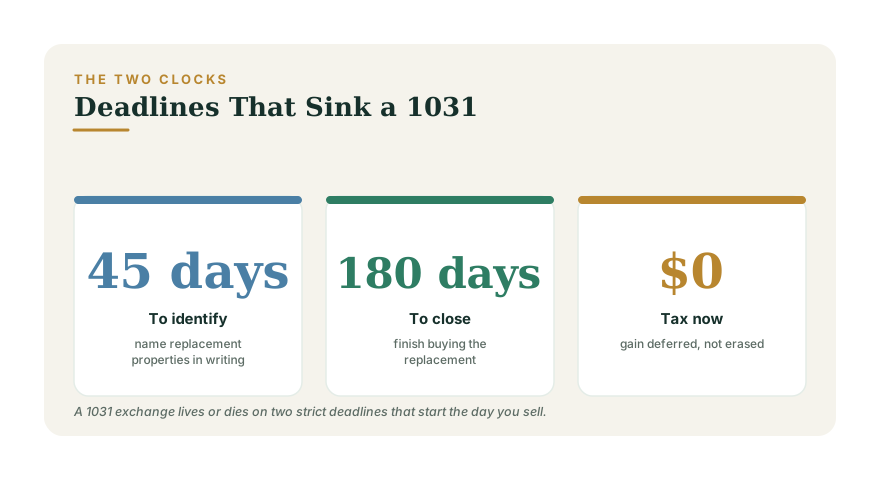
The single most common way a 1031 fails is missing one of two hard deadlines, both starting the day your sale closes:
- 45 days to identify. Within 45 calendar days of selling, you must identify your replacement property or properties in writing, following specific identification rules. There are no extensions for weekends or holidays.
- 180 days to close. You must complete the purchase of the replacement within 180 days of the sale (or your tax-return due date, if earlier). Miss it and the whole exchange collapses into a taxable sale.
Because these clocks are unforgiving, most investors line up their replacement property before selling the first one.
The qualified intermediary rule
You cannot touch the money. If the sale proceeds hit your bank account, even briefly, the exchange is dead and the gain is taxable. A qualified intermediary — an independent third party — must hold the funds between the sale and the purchase and handle the paperwork. This is not optional, and choosing a reputable, bonded intermediary matters because they briefly control a large sum of your money. Their fee is modest relative to the tax deferred.
Boot and the debt trap
To defer all the tax, two things generally must be true: you must buy a replacement of equal or greater value, and you must reinvest all the cash. Anything you pull out — cash, or a reduction in your mortgage debt — is called boot and is taxable to that extent. A frequent surprise is debt boot: if you had a large mortgage on the old property and take a smaller one on the new property, the difference can be taxed even though you never pocketed cash. If your goal is to pull equity out to spend, a 1031 is the wrong tool; a cash-out refinance keeps the property and the tax deferral intact while giving you access to cash.
When it is worth it — and when it is not
A 1031 shines when you want to keep growing a real-estate portfolio: trading up from a small rental to a larger one, consolidating several properties, or relocating your holdings to a better market, all without losing a chunk to taxes at each step. It is less compelling if you actually want out of real estate, if your gain is small, or if the deadlines force you into a mediocre replacement property just to beat the clock. Never let the tax tail wag the investment dog. The broader question of whether rentals suit you at all is covered in Is a Rental Property Worth It?, and the underlying tax you are deferring is explained in The Capital Gains Tax Guide.
Run the numbers before you commit
The exchange only pays off if the deferred tax outweighs the fees, the deadline pressure, and any compromise on the replacement property. Estimate the tax you would otherwise owe with the Capital Gains Estimator, and weigh how a new property fits your holdings with the Home Affordability Calculator. When the numbers work, a 1031 is a genuine wealth accelerator — just build in professional help and map the move at the planning hub before you list.