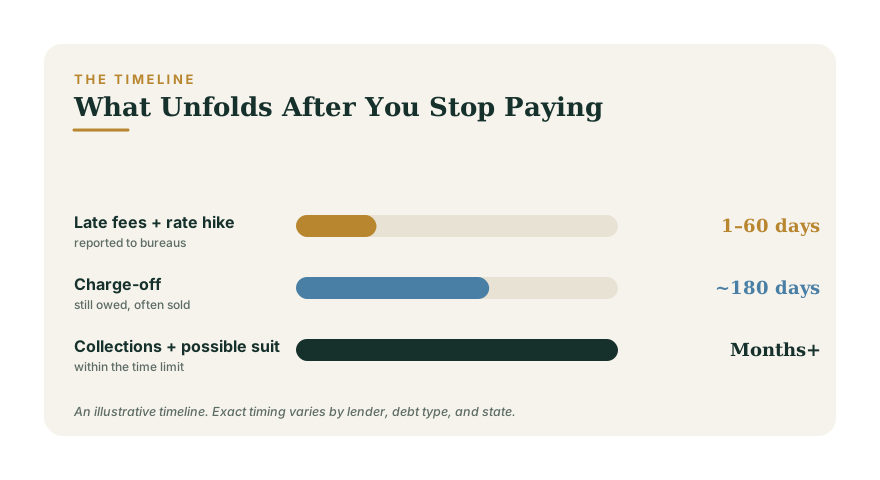
Stopping payment on a debt does not make it disappear — it starts a clock. Knowing the stages of that clock removes a lot of the fear, because most of what happens is predictable, and at almost every step you have options and rights. Here is the timeline a typical unsecured debt, like a credit card, moves through when payments stop.
Days 1–60: late fees, a rate hike, and a credit ding
Miss a payment and the first consequences are fees and interest. A late fee hits, and on a credit card your rate may jump to a penalty APR. Once you are 30 days past due, the lender typically reports the late payment to the credit bureaus, and a single late payment can knock a meaningful chunk off your score. The damage grows at 60 and 90 days. This is the cheapest stage to fix — a quick call to set up a plan, as covered in How to Negotiate With Creditors and Collectors, can stop the slide here.
Around 180 days: charge-off
If a debt stays unpaid for roughly six months, the creditor declares it a charge-off. The name is misleading: charge-off is an accounting move where the lender writes the debt off its own books as a loss. You still owe the money. The charge-off is reported to the bureaus as a serious negative mark, and the creditor will usually either send the account to a collection agency or sell it outright to a debt buyer for cents on the dollar. From here, a new party — a collector — typically takes over.
Collections: a new party, and new rules
Once a third-party collector holds the debt, federal law steps in to protect you. Under the Fair Debt Collection Practices Act (FDCPA), debt collectors cannot:
- Call before 8 a.m. or after 9 p.m., or at times they know are inconvenient.
- Harass you, use abusive language, or call repeatedly to annoy.
- Lie about the amount owed, threaten arrest, or claim they will take actions they cannot legally take.
- Contact you at work after you have told them to stop, or keep contacting you after you have requested in writing that they cease.
You also have the right to debt validation: within five days of first contact, the collector must tell you about the debt, and if you dispute it in writing within 30 days, they must verify it before collecting further. Because debts are sold in bulk with messy records, always validate before paying — sometimes the amount is wrong, or the debt is not even yours.
Lawsuits: real, but bounded
A creditor or collector can sue to recover what you owe. If they win, the court can grant a judgment that may allow wage garnishment or a bank levy, within the limits your state sets. This is the stage to take seriously: never ignore a lawsuit summons. Ignoring it usually means an automatic default judgment against you, whereas showing up — even just to verify the debt and dates — can change the outcome. If you are sued, this is the point to get advice; legal-aid organizations help for free in many areas.
The statute of limitations
Every state sets a statute of limitations on debt — a window (often three to six years, varying by state and debt type) during which a creditor can successfully sue you. Once it passes, the debt becomes "time-barred": you may still owe it morally and it can still be reported for its credit-reporting period, but a collector generally cannot win a lawsuit to force payment. Two cautions matter here. First, a collector may still sue on a time-barred debt hoping you do not show up — which is exactly why you respond to every summons. Second, making a payment or even acknowledging the debt in writing can restart the clock in many states, so be careful before paying on an old debt without understanding the date.
How long it haunts your credit
Most negative marks — late payments, charge-offs, collections — stay on your credit report for about seven years from the original delinquency, then fall off. Their impact fades well before that as they age and as you add positive history. The full picture is in How Long Derogatory Marks Stay on Your Credit. Importantly, paying the original delinquency date does not reset; the seven-year clock runs from when the trouble started, not from when you resolve it.
What to actually do
Whether your goal is to settle, set up a plan, or wait out a time-barred debt, knowledge of the timeline is leverage. If bankruptcy is on the table, separate the myths from reality in Bankruptcy Myths Explained before ruling it out. And before you make any move, lay out every balance, rate, and status with the Debt Payoff Calculator so you are negotiating from a clear picture rather than fear.