For a US citizen who lives abroad permanently, the lifetime obligation to file US taxes on worldwide income can feel like a weight that never lifts. Renouncing citizenship — formally giving up the passport — is the one way to end it. But the US does not let wealthy citizens walk away tax-free. For some people, expatriating triggers a one-time exit tax that can be large, so this is a decision to plan carefully, not make on impulse.
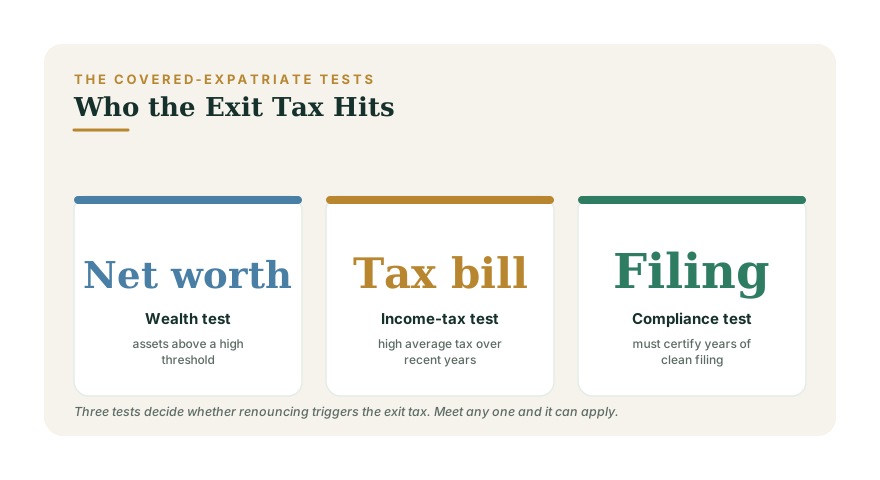
Who the expatriation tax actually hits
Most people who renounce are not hit by the exit tax. It targets only those who become a covered expatriate. If you do not meet any of the covered-expatriate tests, you can generally renounce, file a final partial-year return, and be done — no exit tax. The whole question, then, is whether you are covered, which is why understanding the tests below matters far more than the renunciation paperwork itself. This is the escape valve from the citizenship-based system described in Dual Citizenship and US Taxes.
The covered-expatriate tests
You become a covered expatriate if you meet any one of three tests on the date you expatriate:
- The net-worth test. Your worldwide net worth exceeds a high threshold (two million dollars, illustratively). This sweeps in people who are not "rich" by global standards but who own a paid-off home and solid retirement savings.
- The income-tax test. Your average annual US income-tax liability over the several years before expatriating exceeds an inflation-adjusted figure. Note this is your tax liability, not your income.
- The compliance test. You cannot certify, under penalty of perjury, that you have filed and complied with US tax obligations for the five years before expatriating. Crucially, you can be a modest-means person and still get caught purely by failing to file correctly — making years of clean filing essential before you renounce.
Meeting any single test makes you covered, even if you fail the other two.
The mark-to-market rules
If you are a covered expatriate, the centerpiece is the mark-to-market tax. The US pretends you sold everything you own — stocks, your foreign property, your business — at fair market value the day before you expatriate, and taxes the resulting unrealized capital gain. You may never have sold a thing, yet you owe tax as if you had. A sizable exclusion shelters a chunk of that deemed gain, and certain assets like tax-deferred retirement accounts and trusts follow special rules instead. The underlying capital-gains mechanics are explained in The Capital Gains Tax Guide, and foreign real estate has its own currency wrinkles covered in Owning Foreign Property. There can also be a steep tax on later gifts or bequests you make to US persons after expatriating, which surprises families.
Why planning ahead matters
Because the tests turn on a single date and a small set of numbers, timing and preparation can change the outcome dramatically:
- Fix compliance first. Someone nowhere near the wealth threshold can still become covered just by failing the certification. Getting fully current on filings — sometimes through a streamlined program — should come well before any renunciation.
- Manage the wealth and income tests. Where legitimate, the timing of gifts, asset transfers, or income recognition across years can influence whether you cross a threshold.
- Model the deemed sale. Knowing your unrealized gains in advance tells you whether the exit tax is trivial or enormous, and whether spreading actions across tax years helps.
This is genuinely a situation for a cross-border tax attorney or specialist, not a do-it-yourself project. The cost of a mistake — an unexpected six-figure exit tax, or covered status from a missed form — dwarfs the cost of advice.
A decision, not a reflex
Renouncing US citizenship is a profound personal choice with real financial consequences attached. For many it ends a heavy compliance burden cleanly; for the wealthy or non-compliant, it can come with a substantial bill. Understand whether you would be a covered expatriate long before you act, get your filings spotless, and run the numbers. Start by estimating any deemed gain with the Capital Gains Estimator and reviewing your overall picture with the Tax Health assessment before you take any irreversible step.