Financial fraud has gone professional. The clumsy, typo-ridden email of a decade ago has been replaced by convincing text messages, spoofed caller IDs, cloned websites, and — increasingly — voices and faces generated to sound like someone you trust. It is easy to assume only the careless get caught, but that is the dangerous part: modern scams are engineered to fool careful people on a busy day. The good news is that the defenses are simple, mostly free, and the same handful of habits stop the large majority of attacks.
The scams worth recognizing
Most fraud falls into a few recurring shapes. Knowing the shapes matters more than memorizing every variation:
- Phishing and smishing — emails or texts pretending to be your bank, a delivery service, or the IRS, pushing you to click a link and "verify" your login on a fake site.
- Impostor and "urgent" calls — someone claims to be the IRS, your bank's fraud department, or a grandchild in trouble, demanding immediate payment, often by gift card, wire, or crypto.
- Account takeover — a criminal who has your password logs into a real account, sometimes intercepting a texted code along the way.
- New-account identity theft — using your stolen personal data to open credit cards or loans in your name.
- Investment and romance scams — a too-good return or an online relationship that, after weeks of trust-building, asks you to move money into a "guaranteed" opportunity.
A related trap dresses itself up as help: companies promising to erase bad credit or recover your money for an upfront fee. That is its own con, covered in Why Credit-Repair Companies Are a Scam.
Freeze your credit — the single best free move
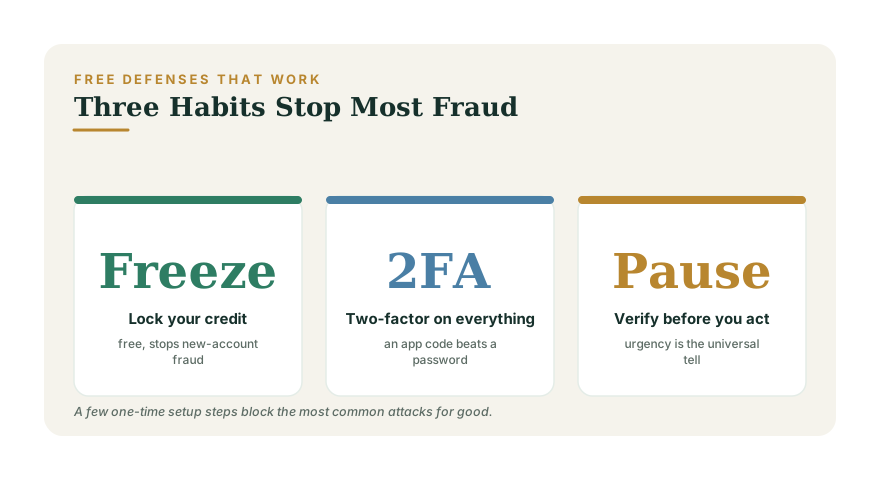
A credit freeze locks your credit reports so no one — including a thief with your Social Security number — can open new credit in your name. It is free, you place it at each of the three major bureaus, and you can thaw it temporarily in minutes when you actually need new credit. A freeze does nothing to your existing accounts or your score; it simply slams the door on new-account fraud, which is one of the most damaging and time-consuming kinds to unwind. If you do one thing after reading this, do this one — the step-by-step is in Freeze Your Credit: The Best Free Fraud Defense.
Turn on two-factor authentication everywhere
A stolen password alone should never be enough to drain an account. Two-factor authentication (2FA) adds a second step — a code or an approval — so a thief with your password still cannot get in. Prioritize your email and your bank: email is the master key, because password resets for everything else land there. Prefer an authenticator app or a hardware key over text-message codes, since texts can be intercepted through SIM-swap attacks, though any 2FA beats none. Pair this with a password manager so every account has a long, unique password and a single breach does not unlock your whole life.
The red flag every con shares
Scams differ in the cover story but share one engine: manufactured urgency that shuts down your judgment. "Act now or your account is closed." "Pay in the next hour or you'll be arrested." "This deal disappears tonight." The pressure exists specifically to stop you from pausing, verifying, or asking someone else — because any of those would expose the lie. Treat urgency itself as the alarm. A few corollaries flow from it:
- Legitimate institutions don't demand odd payment. No real agency or bank asks for gift cards, wire transfers, or cryptocurrency to settle a problem.
- Never act on an inbound contact. Hang up or close the message, then reach the company using the number on your card or its official site — never a number or link they provided.
- No one legitimate needs your full password or a one-time code. A real fraud department will never ask you to read back a verification code.
If you think you have been hit
Move fast but don't panic. Contact your bank or card issuer to freeze the account and dispute charges, change the password and enable 2FA on any affected login, place a credit freeze if you haven't, and report identity theft to the FTC to get a recovery plan. Document everything. Acting in the first hours dramatically limits the damage.
Most of this is one-time setup that quietly protects you for years. Spend an evening freezing your credit, switching on 2FA, and adopting the verify-before-you-act reflex. These habits are especially worth locking in if you manage money solo and don't have a second set of eyes on your accounts — see Financial Planning When You're Single. To make sure the rest of your foundation is solid, run a quick financial resilience check.