A personal loan sits in an awkward middle: more deliberate than a credit card, less anchored than a mortgage. Used well, it can lower your interest cost and give a sprawling debt problem a finish line. Used carelessly, it just adds a new payment on top of habits you never changed. The difference comes down to understanding exactly what kind of debt it is and when its structure helps you.
What a personal loan actually is
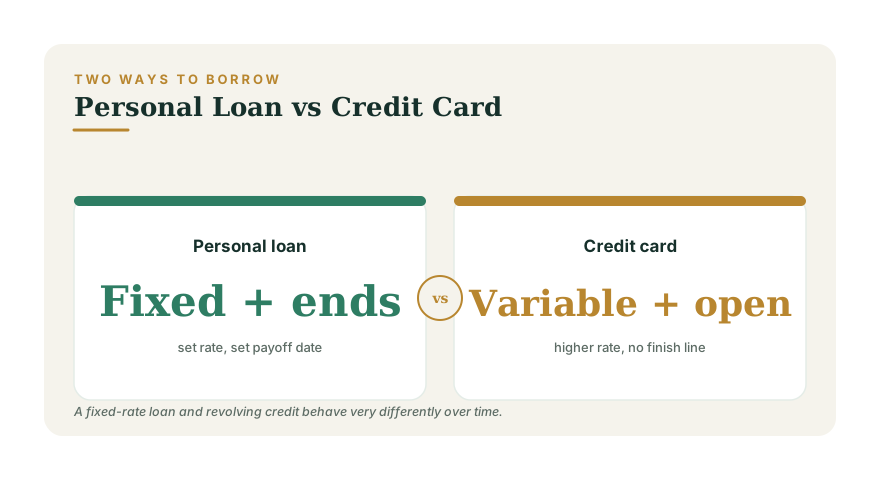
A personal loan is an unsecured, fixed-rate installment loan. You borrow a lump sum, then repay it in equal monthly payments over a set term — often two to seven years — at a fixed interest rate. "Unsecured" means no collateral backs it; you are not putting up your house or car, so the lender prices the loan based mainly on your credit and income. Two features define it: the rate does not move, and the loan ends on a known date. That predictability is its main advantage over revolving credit.
The classic use: debt consolidation
The most common good reason to take a personal loan is to consolidate high-interest debt, usually credit cards. If you are carrying several card balances at 20% or more, a single personal loan at a lower fixed rate can replace them with one payment, a lower interest cost, and a clear payoff date. The math is straightforward: if the loan's rate is meaningfully below your cards' rates, you pay less interest and finish faster.
But consolidation only works if two things are true. First, you actually qualify for a lower rate — borrowers with weaker credit are sometimes offered personal-loan rates no better than their cards, which defeats the purpose. Second, and this is where most people stumble, you stop using the cards. Consolidating and then running the balances back up leaves you worse off, now with both the loan and fresh card debt. We cover that failure pattern in Debt Consolidation Traps.
Personal loan vs credit card
For carrying a balance, a personal loan usually beats a credit card on two fronts: lower interest, and a structure that forces payoff. A card lets you pay the minimum forever while interest compounds; a personal loan's fixed schedule drags you to zero whether you like it or not. The honest reframing from Good Debt vs Bad Debt applies here — it is not the label that matters but the rate, and a personal loan is mostly a tool for converting expensive revolving debt into cheaper, finite debt.
That said, for a short-term expense you can pay off within a billing cycle or two, a card (especially a 0% promotional offer) may be simpler and cheaper, since you avoid loan origination fees.
Personal loan vs HELOC
If you own a home, a home equity loan or HELOC often carries a lower rate than an unsecured personal loan, because your house secures it. That lower rate is the appeal — and also the danger. With a personal loan, default damages your credit; with a home-secured loan, default can cost you the house. Trading unsecured debt for debt backed by your home lowers the rate but raises the stakes considerably, which is rarely worth it for ordinary consumer debt. The trade-offs are laid out in Home Equity Loans vs HELOCs.
Where a personal loan can legitimately make sense
- Consolidating high-rate debt at a genuinely lower fixed rate, with the spending that caused it under control.
- A large, unavoidable, one-time cost — an urgent medical bill or essential home repair — when you have no cheaper option and can comfortably fit the payment.
- Replacing a worse debt, such as refinancing out of a high-rate balance into a lower fixed one.
The traps to watch
- Origination fees. Many lenders deduct a fee (often 1%–8%) from the loan upfront, so you receive less than you borrow. Compare offers by APR, which folds the fee in, not just the headline rate.
- Stretching the term to shrink the payment. A longer term lowers the monthly bill but raises total interest paid. A low payment is not the same as a cheap loan.
- Funding consumption. Borrowing for a wedding, vacation, or lifestyle upgrade turns a fleeting experience into years of payments — exactly the "bad debt" pattern.
- Prepayment penalties on a minority of loans, which punish you for paying early. Read the terms.
- Not fixing the cause. A loan treats a symptom. If overspending or a budget gap created the debt, the loan buys time, not a cure.
Run the numbers first
A personal loan is a tool, and like any tool it is only as good as the job you point it at. Before signing, compare the loan's APR against what you are paying now, confirm the new payment fits your budget, and commit to not refilling the debt you just consolidated. Model the payoff and interest savings against your current balances with the Debt Payoff Calculator so you can see, in real numbers, whether the loan actually moves you forward.