Wedding spending is wrapped in a powerful story: this is the most important day of your life, so no expense is too much. That story is great for the wedding industry and dangerous for your finances. A wedding is one day; a marriage is decades. The goal is not the most expensive celebration you can charge — it is one you can afford that starts your life together without a pile of debt.
The healthiest way to approach it is to set a number first, then design the day to fit, rather than designing your dream day and discovering the bill afterward.
Start with a number you can actually afford
Before you look at a single venue, the two of you need one honest conversation about money. Decide:
- How much you have saved and are willing to use for the wedding.
- How much you can add each month between now and the date, without raiding your emergency fund or pausing retirement contributions.
- What anyone else is genuinely contributing — get this confirmed, not assumed, since family help is often vaguer than couples expect.
Add those up, and you have your real budget. The crucial rule: do not let the budget be a number you hope to grow into with debt. It should be money that already exists or that you can save by the date. If money conversations are new for the two of you, the groundwork is in How to Budget as a Couple and Combining Finances When You Marry.
Where the money actually goes
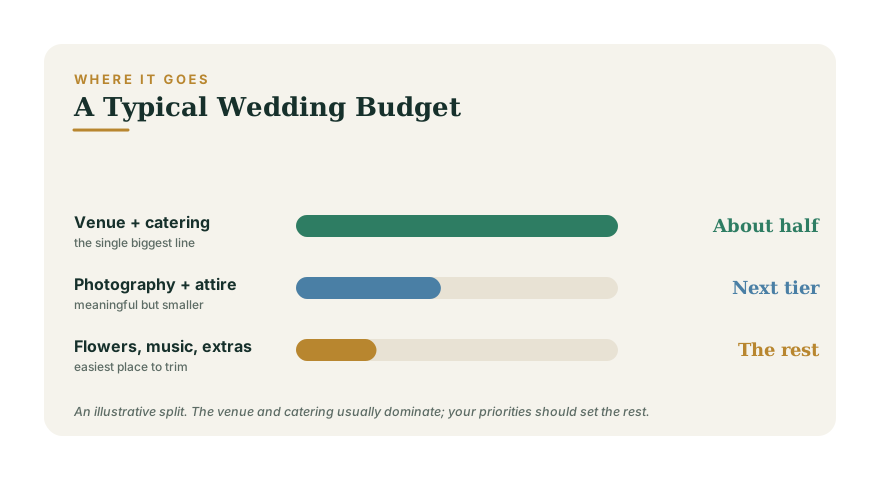
Knowing the typical breakdown lets you spot where your dollars have the most impact. For most weddings:
- Venue and catering usually consume close to half the budget. Because the cost scales with the headcount, your guest list is your biggest single lever — every name added is another plate, drink, and chair.
- Photography and attire form the next tier — meaningful, since the photos outlast the day, but smaller than the venue.
- Flowers, music, stationery, favors, and decor make up the rest and are where most trimming happens with little impact on how the day feels.
Seeing this split early prevents the classic trap: spending freely on early decisions, then discovering the venue alone has eaten the whole budget.
Prioritize: pick the few things that matter to you
You cannot have the top tier of everything on a real budget, and trying to is exactly how couples overspend. Instead, each of you should name the two or three elements that genuinely matter most — maybe it is the photography and the food, or the music and the guest experience. Fund those well, and deliberately go modest on everything else.
This is the difference between a budget that feels like deprivation and one that feels intentional. Nobody remembers the favors. They remember whether the day felt like you. Spending heavily on the parts you do not actually care about, just because a checklist said to, is the most common way wedding budgets balloon.
Build the wedding sinking fund
Once you have a number and a date, the saving plan writes itself. Divide the amount you still need to save by the months until the wedding, and automate that transfer into a dedicated, labeled savings account each payday. A $24,000 budget with $6,000 already saved and 18 months to go means $1,000 a month — a clear, plannable target instead of a vague worry. This is the same approach you would use for any large planned expense, like a vacation: name the total, divide by the months, automate, and watch the bucket fill. Keep the wedding money entirely separate from your emergency fund so a celebration never erodes your safety net.
Do not start marriage in debt
This is the part the industry will never tell you: the way you pay for the wedding matters more to your marriage than the wedding itself. Couples who borrow heavily for one day begin married life servicing debt and arguing about money — and money stress is one of the most cited sources of marital strain. A celebration you paid for in cash, even a smaller one, is a far better start than a lavish one you spend your first two years paying off.
A scaled-down wedding plus an intact emergency fund and a down-payment head start is, by almost any measure, the wealthier choice. Set your number, map the monthly savings with the Budget Analyzer, and treat the wedding as one milestone in the longer plan you are building together at the planning hub.