Almost everyone, at some point, makes a money mistake big enough to lie awake over. A speculative bet that collapsed. A car or a house bought far beyond what the budget could bear. A credit-card balance that quietly snowballed. A scam that emptied an account. In the moment it can feel catastrophic and uniquely shameful, as if you are the only person who has ever been this foolish. You are not — and more importantly, almost every financial mistake is recoverable. What matters now is not the mistake but the response, and a calm, ordered response beats panic every time.
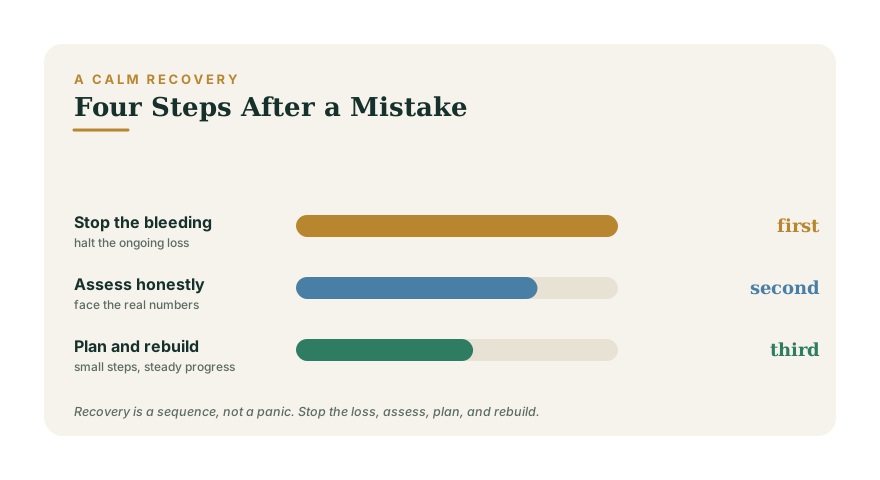
Step 1: Stop the bleeding
Before anything else, make sure the loss has actually stopped. Many money disasters are not single events but ongoing leaks, and you cannot bail out a boat that is still taking on water. If you are bleeding money through a habit, a subscription, or a continuing bad bet, the first job is to shut off the flow.
That might mean closing or freezing an account, canceling a service, halting further contributions to a losing investment, or — in the case of fraud — immediately contacting your bank and freezing your credit. Resist the urge to "make it back fast," which is how a moderate loss becomes a ruinous one. Doubling down to recover a loss is itself one of the most common and dangerous money mistakes. Stabilize first; the rest can wait a day.
Step 2: Assess honestly
Once the situation is stable, you have to look directly at it — and this is the step people most want to avoid. The instinct after a mistake is to not open the statements, to look away from the number, to keep it vague so it hurts less. But vagueness is where money problems metastasize. You cannot fix a problem whose size you refuse to know.
So sit down and write out the real numbers. How much was lost? What is the current balance, the interest rate, the monthly bleed? What do you still have to work with? Bring the whole thing into the light, exactly as it is. This honest accounting is uncomfortable for an hour and liberating afterward, because a defined problem is a solvable one — and almost always less terrifying once it has edges. If the mistake involves spiraling debt specifically, the debt spiral recovery plan walks through this assessment in detail.
Step 3: Make a plan
With the real numbers in front of you, you can build a route out. The plan does not need to be elegant; it needs to be concrete and small enough to actually follow. A workable recovery plan usually includes:
- A clear target. Pay off X by a date, rebuild the emergency fund to Y, recover the lost ground in Z months.
- A monthly number. The specific amount you will redirect toward recovery — found by trimming spending, pausing other goals, or adding income.
- A first domino. The single next action: the call to the lender, the canceled expense, the first extra payment. Momentum comes from doing one thing, not from contemplating everything.
If the mistake wiped out your safety net, rebuilding a basic emergency fund often belongs near the front of the plan, because a cushion is what stops the next surprise from becoming the next disaster. Recovery is rarely fast, but steady, boring progress toward a defined target is exactly what gets you there.
Step 4: Rebuild — and protect against a repeat
As you work the plan, rebuild the structures that make a relapse less likely. Automate the recovery contributions so progress does not depend on willpower. Put friction between yourself and whatever caused the mistake. And let the recovering balance — the debt shrinking, the fund growing — be its own quiet source of motivation. Watching the number move in the right direction is one of the most reliable ways to stay the course.
Separate the lesson from the shame
This is the part that decides whether a mistake makes you poorer or wiser. A financial mistake hands you two things: a lesson and a load of shame. The lesson is useful — keep it. The shame is not, and clinging to it actively makes recovery harder, because shame drives the very behaviors that deepen money trouble: avoidance, secrecy, and rash attempts to undo the past in one move.
So make the separation deliberately. Ask what the mistake taught you — about a blind spot, a trigger, a gap in your knowledge — and write that lesson down as something you will do differently. Then set the self-judgment aside. Making a mistake does not make you a failure; it makes you a person who did a normal human thing and is now handling it like an adult. The people who recover best are not the ones who never err, but the ones who can extract the lesson and drop the shame. The reasons we are so hard on ourselves about money are worth understanding in their own right; your money psychology explores where that weight comes from.
Start the recovery today
Stop the bleeding, look honestly at the numbers, build a small concrete plan, rebuild your defenses, and keep the lesson while you let go of the shame. A mistake is a moment; recovery is a direction. To turn the assessment into an actual plan with a monthly number and a timeline, run your situation through the Debt Payoff tool or the Budget Analyzer, and take the first small step today.