The cash-envelope method is one of the oldest budgeting systems, and it worked for a simple psychological reason: money you can physically see and physically run out of is money you spend carefully. You would cash your paycheck, divide it into labeled envelopes — groceries, gas, fun, eating out — and when an envelope was empty, that category was done for the month. No tracking app required; the limit enforced itself.
Almost nobody carries cash anymore, but the principle behind envelopes is more relevant than ever. The trick is translating it into a digital system that recreates the same friction without the physical bills.
Why envelopes worked in the first place
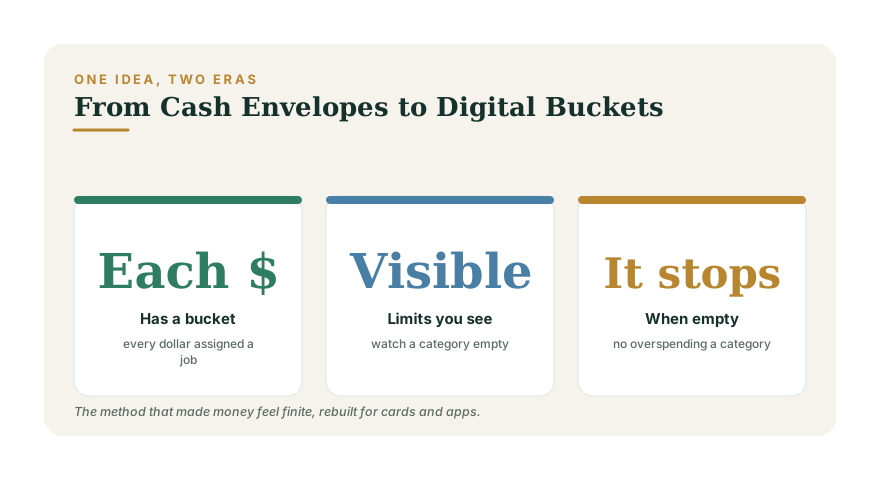
The genius of cash envelopes was not the cash — it was three things the cash enforced. First, every dollar had a job before the month started. Second, limits were visible: you could literally see the grocery envelope thinning out. Third, spending stopped when an envelope was empty, because there was nothing left to hand over. Recreate those three properties digitally and you get the same discipline, with the convenience of cards.
That first property — assigning every dollar a purpose — is exactly zero-based budgeting, where your income minus your assignments equals zero. Envelope budgeting is essentially zero-based budgeting with the categories made tangible.
Method 1: Multiple savings sub-accounts
Many banks now let you open several savings accounts (or "sub-accounts" or "spaces") under one login, each with its own name. This is the cleanest direct translation of physical envelopes. Create one for each savings goal or lumpy expense — emergency fund, car repairs, holidays, annual insurance — and automate a transfer into each on payday. You see each balance separately, so "Car Fund: $640" replaces one anonymous savings number.
This is the natural home for sinking funds: predictable but irregular costs you save toward a little each month so they never blow up your budget. Each sub-account is a digital envelope you are slowly filling.
Method 2: A budgeting app with virtual envelopes
You do not have to open dozens of real accounts. Several budgeting apps recreate envelopes virtually: you keep your money in one or two accounts, but the app divides your balance into categories and tracks each one's remaining "envelope" as you spend. The money never physically moves, but the app shows you that the dining-out category has $30 left, which triggers the same "I'd better slow down" instinct as a thinning cash envelope. This keeps the visibility of envelopes while letting you pay with a card and earn rewards.
Method 3: Two accounts and a payday split
A low-tech middle path that needs no special app: use two checking accounts. One holds your fixed bills (rent, utilities, subscriptions) and the other holds your spending money for the variable categories. On payday, fund the bills account with exactly what the fixed costs require, and send the rest to the spending account. When the spending account runs low, you are near your limit — a single visible number doing the job of many envelopes. It is less granular but extremely simple to maintain.
Handling cards without breaking the system
Cards make overspending easy because there is no physical limit, so add one rule: log or check before you spend, not after. Whether you use an app's envelope view or just glance at the right account balance, the discipline is confirming the category has room before you buy. If a category empties mid-month, the envelope rule applies — you either stop, or you deliberately move money from another envelope and accept that the other category now has less. That conscious trade-off is the whole point; it is what stops one category from quietly eating the rest.
Pick one and start small
You do not need fifteen perfect envelopes on day one. Start with three or four categories that tend to run away from you — usually groceries, dining out, and discretionary fun — and add more once the habit sticks. The method matters less than the consistency. Any version that makes your money feel finite again will beat the open-ended swipe-and-hope approach.
Build your envelopes into a plan
Digital envelope budgeting is the classic method rebuilt for cards and apps: give every dollar a job, keep limits visible, and stop when a category is empty. Pair it with the structure in how to build a budget that works, then set your category amounts and watch them with the Budget Analyzer.