A big purchase — a car, a major appliance, a wedding, a long trip, new furniture — has a way of arriving as either a stressful scramble or a quiet, planned event. The difference is almost never how much you earn. It is whether you started saving for it on purpose, months ahead, instead of reaching for a credit card the week you decided you wanted it.
Budgeting for a big purchase is one of the most satisfying money skills, because it has a clear finish line. Here is how to set one up so the purchase feels earned rather than borrowed.
Set a real target and a real date
Start with the full out-the-door cost, not the sticker price. A car has taxes, registration, and insurance; a trip has flights, lodging, food, and the inevitable extras; furniture has delivery. Underestimating the true number is the most common way these plans fall apart, because you save to the sticker and then borrow for the rest.
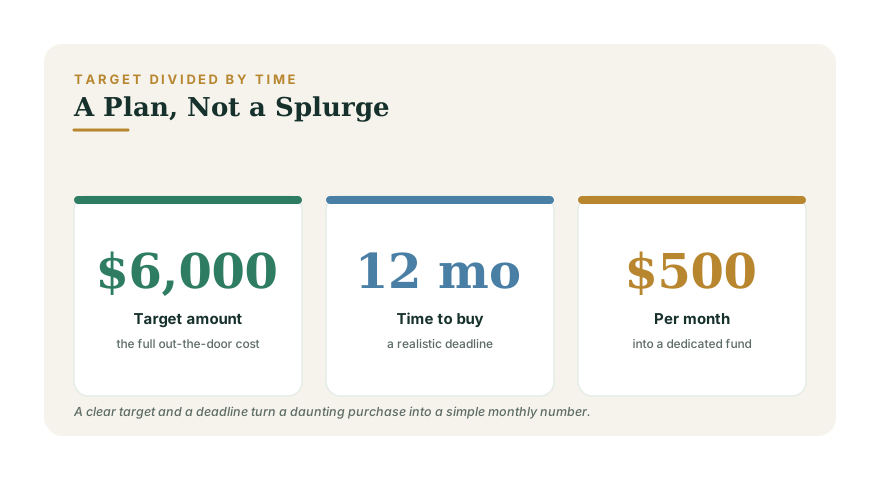
Then attach a date. Target divided by months equals your monthly savings number. Want a $6,000 purchase in twelve months? That is $500 a month. If $500 is unrealistic, you have learned something useful before spending a dime: either extend the timeline or scale down the purchase. The math, not your willpower, tells you what is affordable.
Build a dedicated sinking fund
The mechanism that makes this work is a sinking fund — a separate, labeled savings bucket for this one goal, funded by an automatic transfer on payday. The two features that matter are separate and automatic. Separate, so the money is not mingled with your everyday balance where it quietly gets spent. Automatic, so saving happens before you can talk yourself out of it.
Many banks let you open multiple named savings accounts at no cost, so you can watch "New Car: $3,500 / $6,000" climb toward the goal. That visible progress is genuinely motivating. The full mechanics are in Sinking Funds Explained.
Where to keep the money while it grows
Because a big purchase is usually a short-term goal — months to a couple of years away — the money should be safe and liquid, not invested in the stock market where a downturn could gut your timeline right before you buy. A high-yield savings account or, for a longer horizon, a short CD is the right home. The Best Way to Save for Short-Term Goals covers matching the account to the timeline.
Cash vs financing: an honest comparison
Paying cash means no interest, no debt, and a hard ceiling that keeps you honest about what you can afford. It is the default for most discretionary purchases. But financing is not automatically wrong — it depends on the rate and the asset:
- Pay cash when the financing carries real interest, or when borrowing would tempt you to buy more than you can comfortably afford.
- Consider financing when there is a genuine 0% promotional offer you will pay off in full before it ends, or for a large, durable purchase like a car where a low fixed rate may beat draining your entire emergency fund.
If you do finance a car, anchor the decision to your budget, not the monthly payment a dealer quotes — How Much Car Can You Afford shows why the payment-shopping trap leads people to overbuy. Either way, keep your emergency fund intact; do not turn your safety cushion into a sofa.
Avoid the post-purchase regret
The reason planned purchases rarely produce regret is that the waiting period does two things at once. It funds the purchase, and it tests the desire. A want that survives six months of saving is usually a real one; a want that fades after three weeks was an impulse you are glad you did not finance. Building in that delay is a feature, not a cost.
Two more guards against regret: research the actual model or option you want during the saving window so you buy the right thing once, and decide in advance what you will do with the fund if you change your mind — roll it into the next goal rather than treating it as found money to blow.
Set your target and timeline in the Budget Analyzer to see the monthly number against your real cash flow, and if the purchase is a car, the affordability tools and a clear-eyed look at your overall plan keep it in proportion to everything else you are saving for. A big purchase you saved for in advance feels like a reward; one you financed on a whim feels like a bill.