A single emergency vet visit — a swallowed sock, a torn ligament, a sudden illness — can run into the thousands. That fear is what sells pet insurance. But unlike health insurance for people, pet insurance is a purely optional product, and whether it is worth buying comes down to honest math, not marketing.
The answer is genuinely "it depends," and the deciding factors are predictable once you understand how these policies work.
How pet insurance works
Most pet insurance is reimbursement-based, which surprises first-time buyers. You pay the vet in full, file a claim, and the insurer pays you back a percentage afterward — typically after you have met an annual deductible. You usually choose three dials:
- Reimbursement rate — often 70%, 80%, or 90% of covered costs.
- Annual deductible — what you pay before reimbursement starts.
- Annual payout limit — a cap on what the policy pays per year.
Plans also split into accident-only (cheaper, covers injuries) and accident-and-illness (pricier, covers conditions like cancer or diabetes). Routine care — checkups, vaccines, dental cleanings — is usually a separate paid add-on and rarely worth it, since those costs are predictable and you would be paying a markup to have them reimbursed.
The exclusion that trips everyone up
The single most important rule: pre-existing conditions are not covered. Anything your pet showed signs of before the policy started — or during a waiting period — is excluded, often permanently. This is why the advice is to insure a pet while it is young and healthy, before any condition exists to exclude. Wait until your dog limps and you will find that hip problem is exactly what the policy will not pay for.
Premiums also climb steeply as a pet ages, precisely when claims become more likely. A policy that looked cheap for a puppy can become expensive for a senior dog, and dropping it late means you got little for years of premiums.
The self-insure alternative
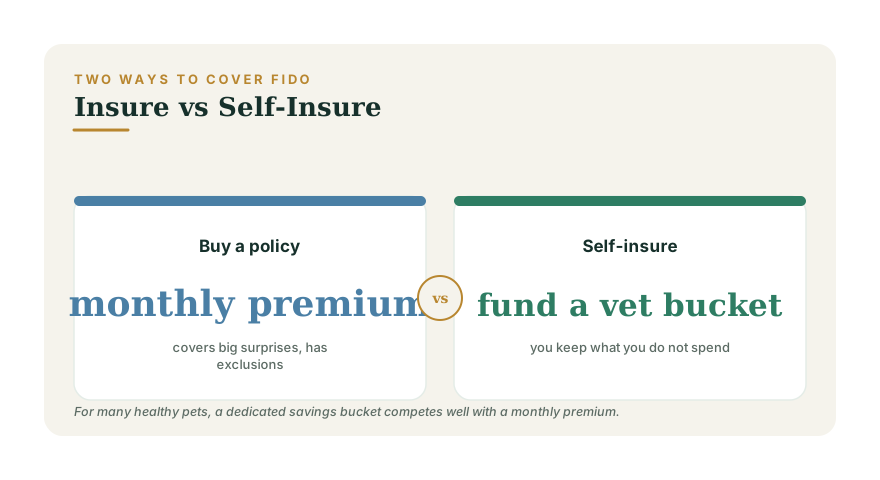
For a healthy pet, there is a clean alternative: insure yourself. Take what you would have paid in premiums and instead direct it into a dedicated sinking fund for vet costs. If your pet stays healthy, that money is still yours — it does not vanish into an insurer's pocket. If something goes wrong, you have a cushion ready.
The honest catch: self-insuring only works if you actually fund the bucket and leave it alone, and if you have enough saved to absorb a large bill before the fund has grown. Early on, a young pet's bucket is thin, which is the one window where insurance arguably earns its keep most. Many owners pair the two — a high-deductible accident-and-illness policy for the catastrophic case, plus a savings bucket for the routine stuff.
Running the cost-benefit honestly
Skip the emotion and do the arithmetic. Estimate the total premiums you would pay over your pet's expected lifetime, then subtract the deductibles, co-pays, and excluded items you would still owe. Compare that to a realistic estimate of vet costs. For many healthy dogs and cats, lifetime premiums exceed lifetime claims — which is how insurers stay in business. Insurance wins clearly in one scenario: a serious, expensive condition you could not otherwise afford. That is the loss worth insuring against.
Ask yourself one blunt question: if my pet needed a $6,000 surgery tomorrow, could I pay it without derailing my finances? If yes, you can likely self-insure. If no, a policy buys real peace of mind — provided you bought it before any condition existed.
A reasonable default
For most owners with a healthy young pet and a solid emergency fund, self-insuring through a dedicated bucket is the lower-cost path on average. Buy a real policy when you cannot absorb a large bill, when the breed is prone to costly conditions, or simply when the anxiety of an uncovered emergency would weigh on you more than the premium. There is no universally right answer — only the one that matches your finances and your nerves.
This is the same logic that governs every optional coverage you own — covered in depth in Self-Insuring: When Skipping Coverage Is Smart. To decide where a pet fund fits among your other goals, sketch it into the planning hub and confirm your cushion can take a surprise with the Financial Resilience Assessment.