When you buy a life insurance policy, the agent rarely stops at the death benefit. They offer a menu of riders — optional add-ons that attach extra features for an extra cost. Some are genuinely valuable and cost very little. Many are narrow products dressed up as protection, designed to nudge your premium higher. Knowing which is which keeps your policy doing its real job: replacing your income for the people who depend on it.
The guiding rule before any rider: get the core policy right first. For most families that means enough term life insurance to cover the years your income is needed, bought cheaply — not a pricey permanent policy loaded with extras.
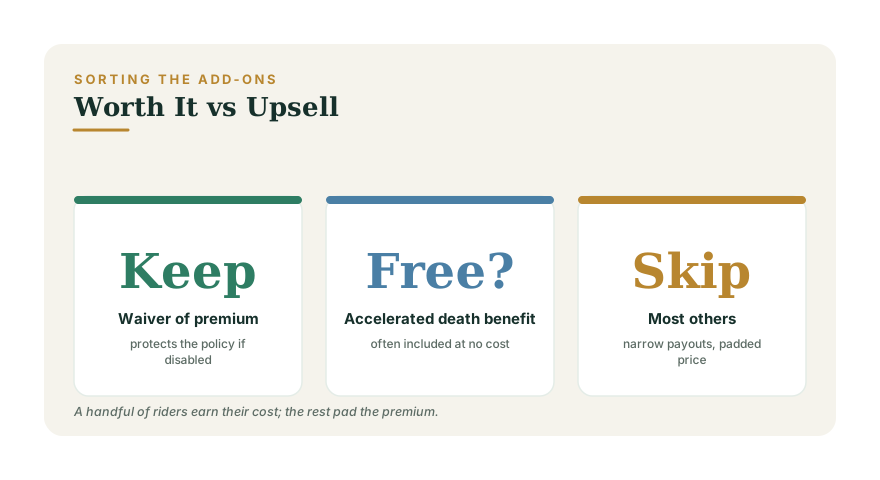
Waiver of premium: usually worth it
This rider keeps your policy in force without you paying premiums if you become totally disabled and cannot work. It is one of the more defensible add-ons, because a disability is exactly the moment you might struggle to make payments — and letting the policy lapse then would be the worst possible time. The cost is modest relative to the protection. Read the definition of "disability" carefully; a strict one limits the rider's usefulness. Note this protects only the policy, not your income — for that you want a real disability insurance policy, the coverage people most often skip.
Accelerated death benefit: take it if it's free
This rider lets you draw part of the death benefit early if you are diagnosed with a qualifying terminal or chronic illness, to cover care or final expenses. The good news is that many insurers now include it at no extra charge. If it is free, accept it — it adds flexibility without raising your premium. If an insurer wants meaningful money for it, weigh it more skeptically, since it advances money you already paid for rather than adding new coverage.
Child rider: convenient, rarely essential
A child rider adds a small amount of life insurance on your children for a low flat cost, often covering all current and future kids under one charge. Be honest about its purpose. Life insurance exists to replace lost income, and a child produces none — so this is really about covering funeral costs during an unthinkable event, not building wealth. For many families a modest emergency fund handles that just as well. The one practical perk: some child riders can later be converted to a standalone policy for the child regardless of their health, which can matter if a health condition would otherwise make them hard to insure. Useful in narrow cases, not a must-have.
Term-conversion: a quietly valuable option
A conversion rider lets you convert a term policy into a permanent one later without a new medical exam. The value is not the permanent policy itself — that is usually overpriced — but the option. If your health declines during the term and you later genuinely need lifelong coverage, conversion guarantees you can get it without being denied or rated up. This rider is often included free or cheap, and because it only buys you a choice rather than committing you to anything, it is worth having even if you never use it. Just do not let it become a sales hook to talk you into expensive permanent insurance you do not need — that is the trap covered in Why Permanent Life Insurance Is Usually a Bad Deal.
The riders to be skeptical of
Many remaining riders pay out only in narrow, specific circumstances and exist mostly to raise the premium:
- Accidental death benefit — pays extra only if you die by accident. Your dependents' need does not change based on how you die, so this is arbitrary. Better to simply buy enough base coverage.
- Return-of-premium — refunds your premiums if you outlive a term policy, in exchange for a much higher price. The math rarely beats buying cheaper term and investing the difference.
- Guaranteed insurability — lets you buy more coverage later without an exam. Can be useful, but only if you realistically expect rising needs; otherwise it is dead weight.
None of these are scams exactly, but each narrows the conditions under which you benefit while widening your premium — the opposite of what you want.
The principle to apply
Riders should be judged the same way as any insurance decision: does this protect against a loss I genuinely could not absorb, at a price proportional to the risk? Waiver of premium and a free accelerated death benefit usually pass. A free term-conversion option is worth keeping for the flexibility. Most of the rest fail, because they slice protection into thin, specific scenarios you can cover more cheaply with adequate base coverage and savings — the same discipline laid out in Self-Insuring: When Skipping Coverage Is Smart.
Before you sign, decide how much base coverage you actually need so you can see riders for the extras they are. Run your numbers through the Insurance Needs Calculator, and confirm the whole protection plan holds together with the Financial Resilience Assessment.