Ask someone what their most valuable asset is and they will usually say their house or their retirement account. For most working people, the real answer is their future income — the millions of dollars they will earn over a career. We insure the house and the car without a second thought, yet the engine that pays for both, our ability to work, often goes uninsured. Disability insurance fixes that, and it is consistently the most ignored coverage in a sound financial plan.
Short-term vs long-term
Disability coverage comes in two flavors that do different jobs:
- Short-term disability bridges a temporary gap — recovery from surgery, a broken leg, childbirth. It usually pays for a few weeks to a few months and often starts quickly. Many employers provide it.
- Long-term disability is the one that truly protects you. It kicks in after short-term coverage runs out and can pay for years — potentially until retirement age — if a serious illness or injury keeps you from working. This is the coverage worth focusing on, because it guards against the financially devastating scenario, not the inconvenient one.
Own-occupation vs any-occupation
The single most important clause in a policy is the definition of disability, and it varies more than people realize:
- Own-occupation pays benefits if you cannot perform the specific job you were trained for, even if you could do some other kind of work. A surgeon who loses fine motor control collects benefits even if she could technically still teach. This is the stronger, more protective definition.
- Any-occupation only pays if you cannot do any job suited to your education and experience — a much harder bar to clear. These policies are cheaper, but they pay out far less often.
An own-occupation definition costs more but is usually worth it, especially for specialized or higher-earning professionals whose income is tied to a particular skill.
Benefit period and elimination period
Two other terms shape both the price and the protection:
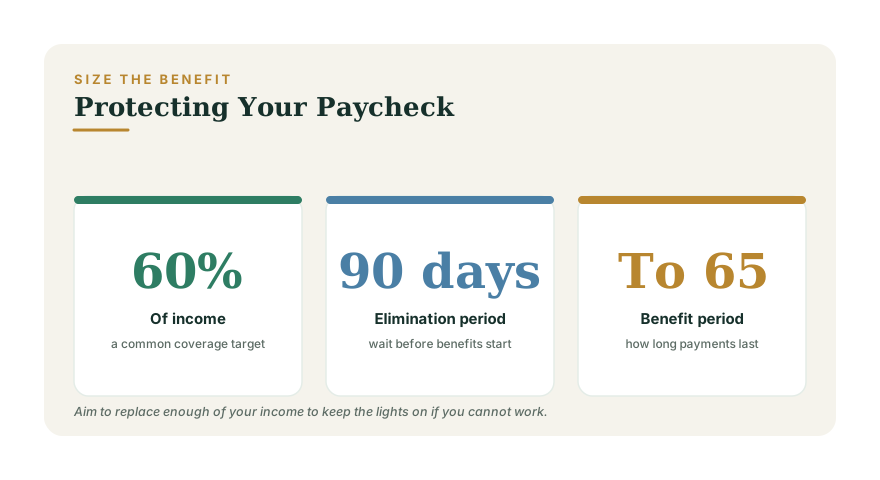
The elimination period (or waiting period) is how long you must be disabled before benefits begin — commonly 30, 60, or 90 days. Think of it as the policy's deductible, measured in time. A longer elimination period means a cheaper premium, because you are agreeing to cover the early stretch yourself. This is exactly where your emergency fund earns its keep: a solid cash cushion lets you safely choose a longer, cheaper elimination period.
The benefit period is how long payments last once they start — two years, five years, or all the way to age 65. A longer benefit period costs more but protects against the worst case: a permanent disability decades before retirement. Since long-term protection is the entire reason to buy this coverage, a benefit period to retirement age is generally the goal.
Sizing the benefit
Most policies are designed to replace around 60% of your gross income, and there is a reason it is not 100%. Insurers cap the replacement on purpose, so you retain an incentive to return to work. There is also a tax wrinkle worth understanding: if you pay the premiums with after-tax dollars, the benefits usually come to you tax-free — which means 60% of gross income can land close to your old take-home pay. If your employer pays the premium, the benefit is typically taxable, so the same 60% stretches less far.
To size your own coverage, start from your essential monthly expenses — not your full lifestyle, but the bills that must be paid: housing, food, utilities, insurance, minimum debt payments. Then subtract any coverage you already have through work and any other income a household could rely on. The gap is what you need a private policy to fill.
Start with what your job offers
Many employers provide some group long-term disability, often as part of the package you review when you start — see your first job's benefits. Group coverage is a good start, but check the fine print: it often uses the weaker any-occupation definition, caps the benefit at a modest percentage, and disappears if you change jobs. High earners and specialists frequently need a supplemental individual policy on top to close the gap.
The odds of a working-age adult facing a lasting disability before retirement are higher than most people assume, and far higher than the odds of dying young. Protecting your paycheck deserves at least as much attention as protecting your life. Run the numbers on the income you would need to replace with the insurance needs calculator, and see how it fits your wider plan with a financial wellness check.