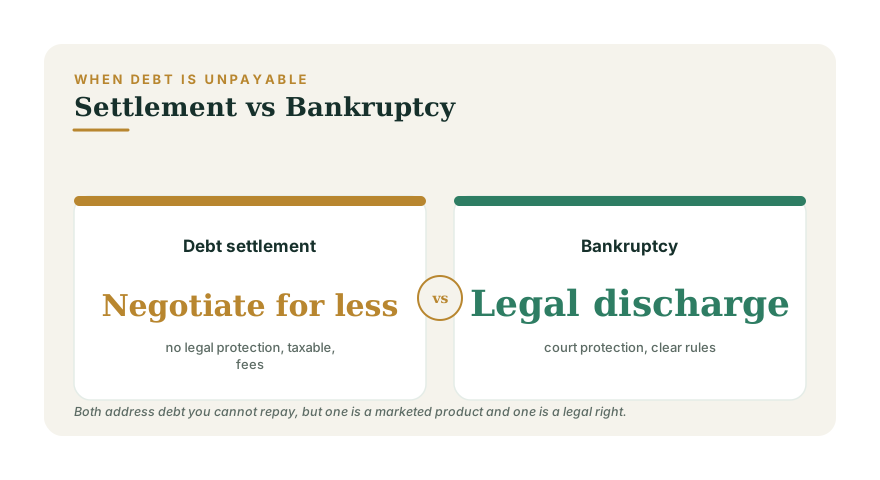
When debt grows past any realistic chance of full repayment, two options dominate the conversation: debt settlement and bankruptcy. They are often discussed as if they were similar last resorts, but they are fundamentally different — one is a commercial service sold to you, the other is a legal process with the force of a court behind it. Understanding the real tradeoffs matters, because the wrong choice can leave you paying for years and still not free.
What debt settlement actually is
Debt settlement means negotiating with creditors to accept less than the full balance — say, paying 50 cents on the dollar to close an account. You can attempt it yourself, but the ads you see come from for-profit settlement companies that do it on your behalf for a fee. Their typical model is the problem: they tell you to stop paying your creditors and instead funnel money into an account they control, waiting until balances are delinquent enough that creditors might settle. The Consumer Financial Protection Bureau warns that this approach is risky and can leave consumers deeper in debt (consumerfinance.gov).
The hidden costs of settlement
Settlement is rarely the clean discount it is marketed as:
- Your credit gets wrecked anyway. Deliberately going delinquent for months tanks your score just as hard as many bankruptcies, and the missed payments stay on your report for years.
- Interest and fees keep growing. While you withhold payment, the original balance accrues interest, late fees, and penalties — so the "savings" shrink against a bigger number.
- Forgiven debt can be taxable. The IRS generally treats canceled debt over a threshold as taxable income, so a settled balance can produce a surprise tax bill.
- No legal protection. Creditors are not obligated to settle. They can keep calling, and some can sue you during the process — settlement gives you no shield.
- Steep fees. Settlement companies take a significant cut of the enrolled or forgiven debt, eating into any benefit.
If you are going to pursue reduced payoffs, doing it yourself is covered in How to Negotiate with Creditors — it avoids the company fees and the instruction to stop paying.
What bankruptcy actually offers
Bankruptcy carries stigma, but it is a legal right designed exactly for unpayable debt, and it comes with protections settlement cannot match. The two common consumer forms:
- Chapter 7 discharges most unsecured debt in a matter of months. It may require liquidating certain assets, though generous exemptions protect essentials for most filers, and there is an income test to qualify.
- Chapter 13 puts you on a court-supervised repayment plan over three to five years, after which remaining eligible debt is discharged. It is often used by people who want to keep a home or have income above the Chapter 7 limit.
The moment you file, an automatic stay legally halts collection calls, lawsuits, wage garnishment, and foreclosure activity. That court protection is the single biggest difference from settlement. Many widespread fears about bankruptcy are overstated — see Bankruptcy Myths, Explained.
How to think about the choice
Neither is pleasant, but the comparison is clearer than the marketing suggests. Debt settlement can occasionally make sense for a specific account when you have a lump sum and negotiate it yourself — but the for-profit "stop paying everything" model frequently leaves people with tanked credit, a tax bill, lawsuits, and fees, sometimes worse off than if they had filed. Bankruptcy is a bounded legal process with rules, protection, and a defined endpoint, which for genuinely unpayable debt is often the more honest reset. Before either, an appointment with a nonprofit credit counselor and a bankruptcy attorney (initial consultations are frequently free) will tell you what actually fits your situation.
The bottom line
Be deeply skeptical of any company that says stop paying your creditors and pay us instead. Settlement is a product with real downsides that its ads omit; bankruptcy is a legal tool with protections that settlement lacks. If you are not yet at the point of no return, a structured payoff may still be possible — start with the Debt Spiral Recovery Plan and model an aggressive payoff with the Debt Payoff Planner. Understand the credit impact of either route with the Credit Score Simulator, gauge your footing with the Financial Resilience assessment, and build a recovery plan at the planning hub.