Credit score optimization has become a hobby. People refresh apps daily, agonize over a 12-point dip, and reshuffle their finances chasing the magic 800. The dirty secret of the credit industry is that for almost everyone, the difference between a very good score and a perfect one is worth essentially nothing in dollars.
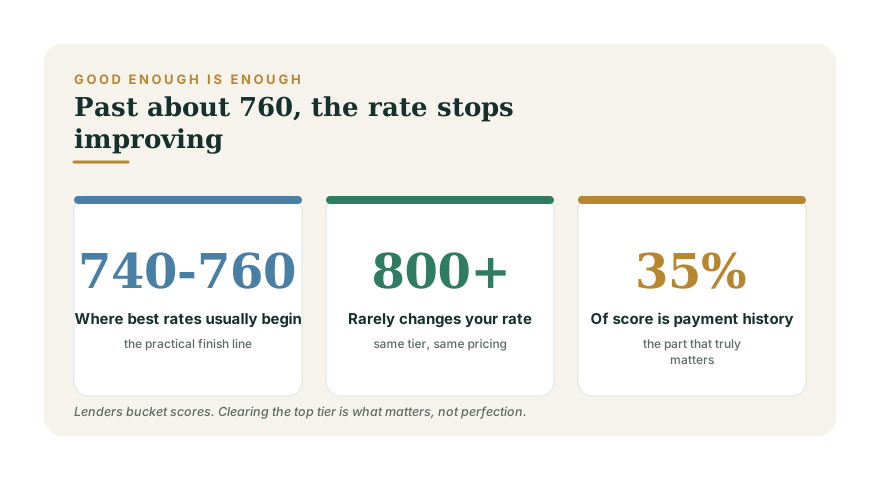
The honest truth is that a credit score is a gate, not a dial. Once you are through the gate into the top pricing tier, pushing the number higher does not lower your interest rate, because you are already getting the best rate the lender offers.
Follow the Money
There is a whole industry built on score anxiety. Monitoring subscriptions, credit-builder products, and so-called optimization services all profit when you believe your score needs constant tending and that every point matters. Free score displays are often loss leaders designed to funnel you toward card and loan offers, since the platform earns a referral fee when you apply.
Keeping you focused on the number is profitable. It drives applications, subscriptions, and product sales. The reality, that you can hit good enough and then ignore the score for years, does not sell anything, so you rarely hear it.
How Lenders Actually Use Scores
Lenders do not price loans on your exact score. They price in tiers. A mortgage lender, for example, groups applicants into ranges, and everyone in the top range gets the same best rate. The common cutoff for that top tier sits around 740 to 760 depending on the loan. Hit it and you are done. A 760 and an 820 typically pay the identical rate on the same loan.
The dollars confirm it. The jump from a 650 to a 740 score can save real money, potentially lowering a mortgage rate by a meaningful margin and saving tens of thousands over the life of the loan. The jump from 760 to 820 usually saves nothing, because both land in the same pricing bucket. The first 100 points of improvement are worth chasing. The last 40 are vanity.
What Actually Moves a Score
Strip away the mystique and the score is mostly two things you already control.
- Payment history, the largest factor at roughly 35%. Pay every bill on time, every time. A single missed payment can cost more points than years of optimization tricks can add back.
- Credit utilization, roughly 30%. Keep balances low relative to your limits. Using a small fraction of your available credit signals control. This is the lever most people can move fastest.
The rest, length of history, credit mix, and new inquiries, matters far less and largely takes care of itself with time. Most so-called optimization tactics chase these minor factors for a few points that do not change your rate.
When Score Obsession Causes Real Harm
The danger is not wasted time. It is bad decisions made in the name of a higher number. People open cards they do not need to add available credit, then face annual fees and the temptation to spend. They keep an unused account open out of fear, or worse, they avoid closing a card with a fee because they read it might ding their score by a few points, points that change nothing about their actual rate.
Some people delay a needed loan, take a financing offer that hurts their finances, or churn cards in ways that complicate their lives, all to nudge a number that is already high enough. The score was supposed to serve your financial life. Optimization inverts that and makes your financial life serve the score.
How to Protect Yourself
- Find your practical finish line. For most major borrowing, that is roughly 740-760. Once you are there, stop optimizing.
- Automate on-time payments. This single habit protects the biggest factor and removes most score risk.
- Keep utilization low by paying down balances, not by chasing higher limits you might spend against.
- Do not open or close accounts for points. Make those decisions on whether the card itself is worth holding.
- Check your full credit report once a year for errors, which can genuinely depress a score, but ignore daily point fluctuations.
The Decision Rule
- Is your score already in the top pricing tier for what you plan to borrow? If yes, stop optimizing and ignore the number.
- Are you making a money decision mainly to raise a score? If yes, that is the obsession talking, reconsider it on the merits.
- Are you paying on time and keeping utilization low? If yes, you are doing the only two things that matter.
- Are there errors on your report? Fix those. Everything else is noise.
Our Honest Recommendation
Aim for good enough, then forget about it. Get into the top tier, around 740-760, by paying on time and keeping balances low, and then let the score do its job in the background while you focus on things that actually build wealth: your savings rate, your investments, and staying out of high-interest debt. A 760 spends exactly like an 820 at the closing table.
If you are still climbing toward that finish line, the steady habits matter more than any trick, and our articles walk through them. Once you are there, redirect that energy to the calculators under tools and the long view at your plan, where the real money is made. The credit industry wants you to keep playing the score game forever. You are allowed to win and walk away.