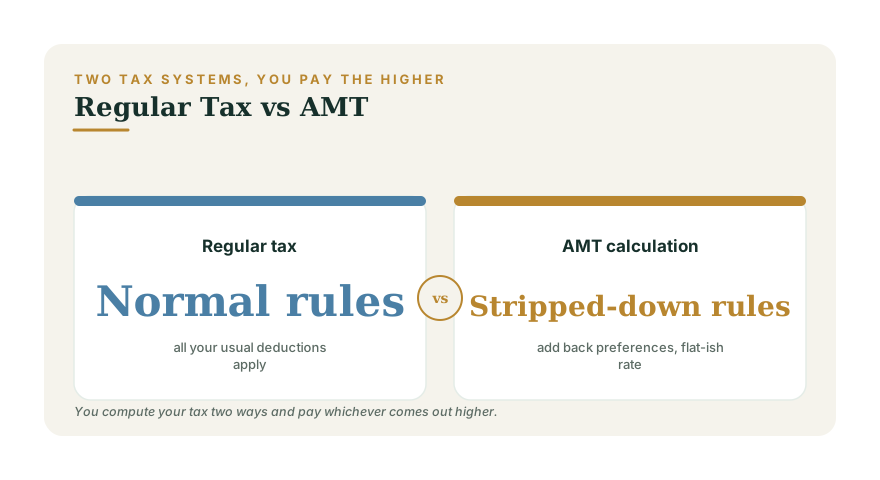
The Alternative Minimum Tax, or AMT, is one of the most misunderstood parts of the US tax code. It is not an extra tax bolted onto your normal bill. It is a parallel tax system: you calculate what you owe under the regular rules, then recalculate under the AMT rules that disallow many common deductions, and you pay whichever number is higher. For most households the regular calculation wins and the AMT never comes up. For a specific set of taxpayers, it still bites.
The good news is that the AMT reaches far fewer people than it used to. A major 2017 tax law sharply raised the AMT exemption and the income level where it phases out, and those changes pulled millions of middle- and upper-middle-income families out of AMT range. But the system was not repealed, and understanding when it can still apply protects you from a surprise.
How the AMT actually works
The AMT starts from your income and then adds back a set of items the regular system lets you subtract. It gives you a large AMT exemption instead of your regular deductions, then applies a two-tier AMT rate to what is left. If that result exceeds your regular tax, the difference is your AMT. The exemption is generous but it phases out at higher incomes, and it is that phase-out, combined with certain add-backs, that creates an AMT liability. The IRS explains the mechanics and the governing form, Form 6251, on its alternative minimum tax pages. The exemption amounts and phase-out thresholds are adjusted for inflation annually, so describe them as moving targets rather than fixed numbers.
What triggers the AMT today
Because the exemption is now so high, ordinary wage earners rarely hit the AMT. The situations that still do tend to involve specific "preference items" or unusually large deductions:
- Exercising incentive stock options (ISOs). This is the classic AMT trap for tech employees. When you exercise ISOs and hold the shares, the paper gain (the spread between the strike price and the market value) is invisible to the regular tax system but counts as income for the AMT. You can owe a large AMT bill on gains you have not cashed in — and if the stock later falls, the pain is real. This is why the mechanics of stock options matter so much before you exercise.
- Very high state and local taxes, historically. The AMT disallows the state and local tax deduction, so people in high-tax states used to be pushed into it. The current cap on that deduction has muted this effect, but it is still an add-back.
- Large numbers of dependents or certain itemized items. Because the AMT ignores some deductions, taxpayers who lean heavily on those breaks can find the two calculations converge.
- Exercising private-company options plus other income spikes in the same year. Stacking events in one tax year is what tips many people over.
The ISO trap, in plain terms
If you take one thing from this article, make it this. Suppose you exercise incentive stock options and keep the shares to get favorable long-term treatment later. The regular tax system sees no income yet. The AMT, however, treats the bargain element — how much the shares are worth above what you paid — as income right now. You can owe tens of thousands in AMT on wealth that exists only on paper, and if the company's value drops before you sell, you may have paid tax on a gain that evaporated. Modeling an exercise before you pull the trigger is essential; the RSU and ESPP Calculator helps you frame the numbers, and any equity event deserves a look with the Tax Strategies tool.
The AMT credit: getting some of it back
The AMT is not always permanent money lost. When the AMT is caused by timing items — most notably the ISO exercise — you may generate a minimum tax credit that you can use in future years when your regular tax exceeds your AMT. It effectively refunds, over time, the portion of AMT that arose because income was recognized earlier for AMT than for regular tax. It does not come back all at once, and it does not apply to permanent differences, but it softens the blow for equity-driven AMT. The IRS describes the credit on its forms and instructions pages.
How to see it coming
The AMT punishes surprises far more than it punishes planning. A few habits keep it from ambushing you:
- Run both calculations before any large equity event. If you plan to exercise ISOs, estimate the AMT first and consider spreading exercises across tax years to stay under the exemption phase-out.
- Watch income spikes. A bonus, a stock sale, and an option exercise landing in the same year can combine to trigger AMT that none would trigger alone.
- Coordinate with the other high-income surtaxes. The AMT often shows up in the same years as the Net Investment Income Tax, so look at them together.
- Track your minimum tax credit. If you paid AMT because of timing, note the credit carryforward so you actually claim it in later years.
The bottom line
For most people, the AMT is now a non-event — the high exemption means the regular calculation almost always wins. But if you exercise incentive stock options, live in a very high-tax area, or stack big income events in one year, the AMT can still reach you, sometimes for tax on gains you have not realized. Understand the trigger before the event, not after. Start by mapping your year with the Tax Strategies tool, then pressure-test your overall picture with the Tax Health assessment and the planning hub.